Summer 1992, sweltering heat, a fan spinning away, and I'm sitting at my 486, ramming into the same Japanese position over and over again. Wings of Fury by Brøderbund — a game that taught me back then that frustration and addiction aren't opposites.
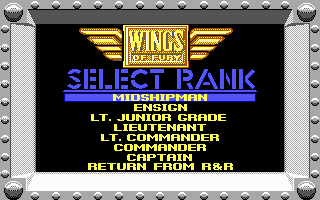
It's an action arcade game from 1989 set in the Pacific theater of World War II. You're behind the controls of a carrier-based fighter, launching from an aircraft carrier, and your mission is to attack Japanese coastal fortifications, take out infantry, machine gun nests, anti-aircraft cannons, and occasionally harass enemy vessels. Missions are short, but that doesn't mean simple.
The controls are surprisingly physics-based for their time. Your plane loses speed, you need the right approach angle, you have to drop bombs at exactly the right moment — too early and you overshoot the target, too late and you're going down with it. Landing on the aircraft carrier is its own discipline, one that'll have you loudly commenting on your own coordination in those first hours. Difficulty ramps up fast, and the first mission preps you nicely for the second by showing you just how much you still can't do. The last mission is a different beast entirely — words fail you there.
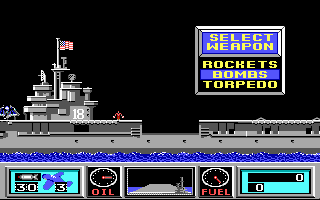
What set Wings of Fury apart from other action games of that era was precisely that degree of control. It wasn't just about mashing buttons and watching explosions. You had to think about approach, target order, ammunition reserves. And yet it was still arcade, not a simulator. Brøderbund nailed that balance. Graphics look like a memory of a memory by today's standards, SoundBlaster audio was decent back then, these days it's more of a historical document — but the gameplay holds up surprisingly well.
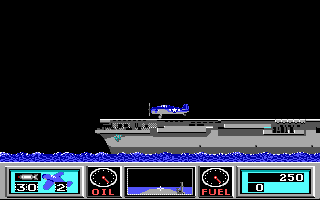
Who should play Wings of Fury today? Anyone with patience for a difficulty curve that waits for no one, and who wants to feel how addictive games were made before — no tutorials, no hand-holding, just you, the enemy, and another attempted landing that might just work this time. Fire it up in your browser via DOSBox emulation and you're good to go. Half an hour of messing around and you'll realize it's midnight.
 old
old


 ▶Doom1993MS-DOS / PC


 ▶Contra1988MS-DOS / PC

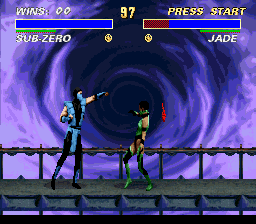 ▶Ultimate Mortal Kombat 31996Super Nintendo
