 old
oldThe Commodore 64 is the best-selling home computer of all time. Its SID chip gave games an unmistakable sound, and tens of thousands of titles were made for it in the 80s.
- Maker: Commodore
- Since: 1982
- Play via: EmulatorJS
Prefer to play offline on your PC? Emulators & how-to →


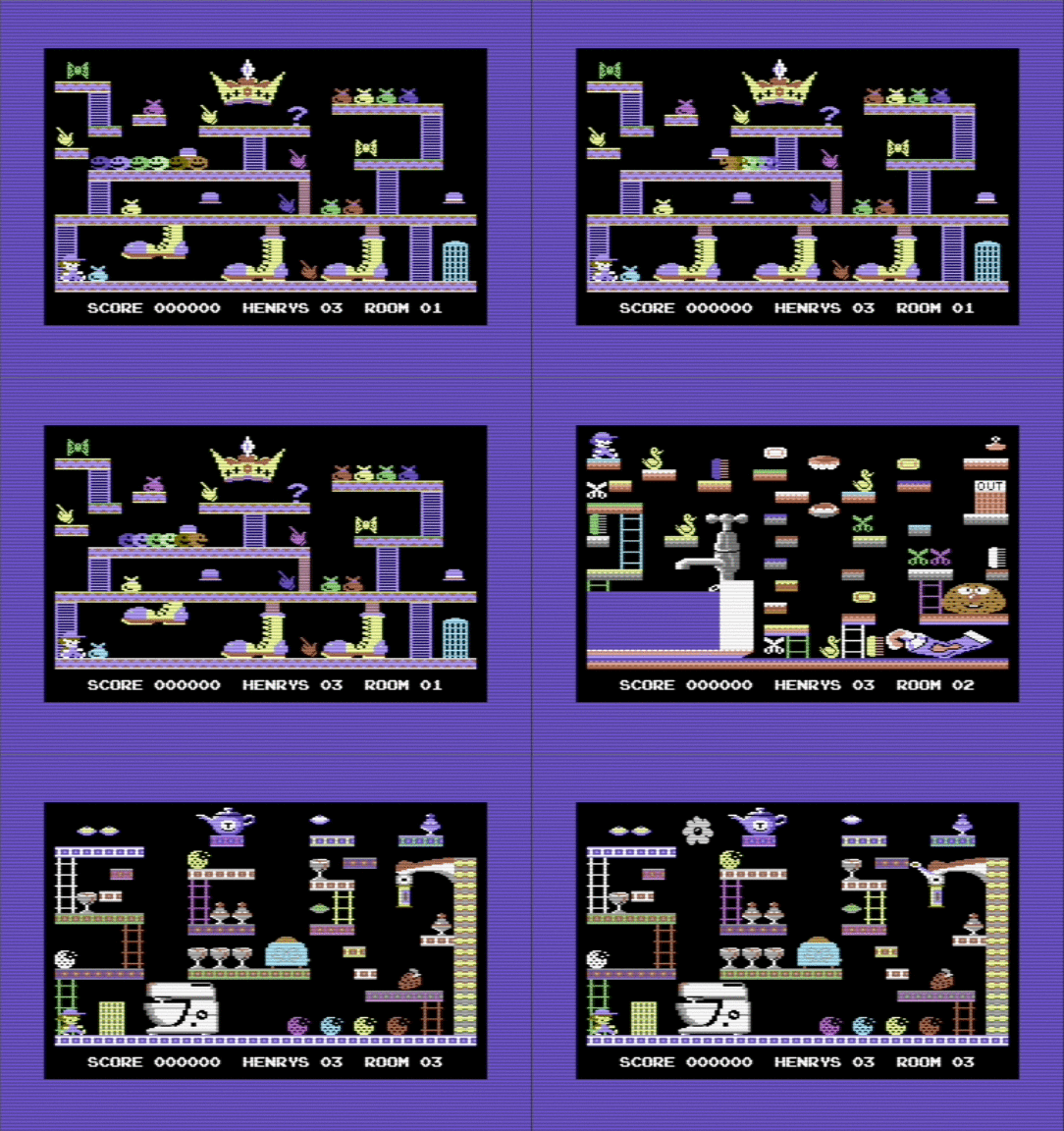 ▶Henry's HouseCommodore 64


Commodore showed the 64 at CES in January 1982 and shipped it that August. It became the best-selling single computer model ever made, with estimates ranging from 12.5 to 17 million units, largely because Commodore owned the chip factory and could undercut everyone else on price. Inside were a MOS 6510 running at about 1 MHz and two custom chips that did the real work. The VIC-II gave 16 colours, eight hardware sprites, smooth scrolling and raster interrupts, which let programmers change the display mid-frame and break the machine's nominal limits. The SID, designed by Bob Yannes, was a proper three-voice synthesiser with envelopes, a multi-mode filter and ring modulation — not a beeper, but a synth chip that happened to live in a home computer.
Why the SID mattered
That sound chip turned game music into a craft with named authors. Rob Hubbard's work on Sanxion, Thing on a Spring and Monty on the Run and Martin Galway's on Delta were reasons to buy a game on their own. The software library was equally distinctive. Epyx built the sports-event genre with Summer Games and the still-brilliant Impossible Mission, and also produced Pitstop. Jeff Minter made a career out of deliberate oddness with Hover Bovver and Attack of the Mutant Camels. British bedroom coders supplied Skool Daze, Cauldron II and Thundercats; the shooter side gave Armalyte and Turrican II; and deeper games like Wasteland, Autoduel and Shadowfire showed the machine could carry weight. Mayhem in Monsterland arrived near the end of the C64's life and is still held up as proof of how much was left in the hardware.
Playing C64 games in your browser
561 of the 761 Commodore 64 titles in our catalogue run straight in the browser. The emulator sits inside the page and handles the 6510, the VIC-II and the SID, so you hear the music as the chip actually produced it. Nothing is installed and nothing is downloaded. You also skip the part everyone remembers least fondly: the 1541 disk drive and the Datasette were famously slow, and loading a game could take several minutes.