 old


 ▶F11993Sega Mega Drive

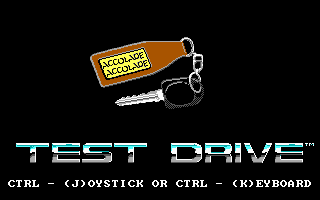 ▶Test Drive1987MS-DOS / PC


 ▶Micro Machines1994MS-DOS / PC


 ▶Turbo Outrun1989Sega Mega Drive


 ▶Road Rash II1993Sega Mega Drive

 ▶Street Rod 2 - The Next Generation1991MS-DOS / PC


 ▶Ivan Iron Man Stewarts Super Off Road1990MS-DOS / PC
 ▶OutRunners1992Sega Mega Drive
 ▶Test Drive II - The Collection1990MS-DOS / PC


 ▶NewArcade Rally2001MS-DOS / PC

 ▶Chase H.Q. II1992Sega Mega Drive
 ▶Pitstop II1984MS-DOS / PC


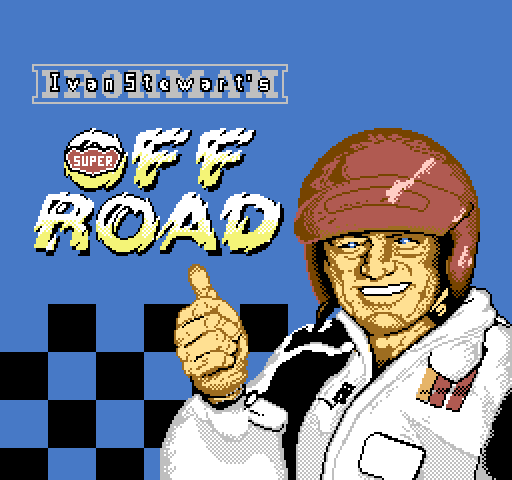 ▶Super Off Road1989Commodore 64

Old racing games were shaped by the machines they had to run on, and that constraint produced a remarkable range. Some chased simulation and gave you gear ratios and tyre compounds. Others threw physics out entirely and asked only whether you could hold a line at 200 km/h with three pixels of road visible. Stunts sat in the middle: a serviceable driving model wrapped around a track editor that let you build loops, corkscrews and jumps over water, which is why people still trade tracks for it.
Two schools, one decade
The arcade school came first — sprite-scaled roads, a countdown clock, checkpoints instead of laps. The home-computer school added championships, damage models and, eventually, opponents with names. Codemasters found a third way with Micro Machines, moving the camera above the cars and turning breakfast tables and pool tables into circuits, which made split-screen races viable on hardware that could never have handled a first-person cockpit. Rally sat apart again: one car, one co-driver, a stopwatch and no opponent to block your line. Lotus: The Ultimate Challenge is the other end of that spectrum, all speed and horizon and a soundtrack doing most of the emotional work.
The catalogue keeps the originals rather than remakes. Where a title is flagged as playable, it boots directly in your browser through an in-page emulator — nothing to install, no plugin to approve, no account to create. Controls are mapped to the keyboard, so a game written for a joystick in 1990 is playable on a laptop today without a single download.