 old


 ▶F11993Sega Mega Drive

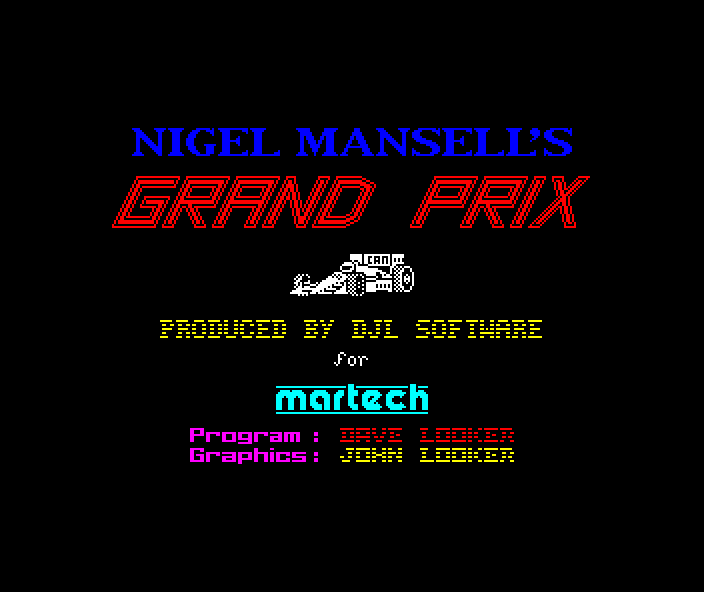 ▶Nigel Mansell's Grand Prix1988ZX Spectrum
 ▶Ayrton Senna's Super Monaco GP II1992Sega Mega Drive
 ▶Super Monaco GP1990Sega Mega Drive

 ▶Indianapolis 5001989MS-DOS / PC


 ▶Pole Position1986MS-DOS / PC


Motor racing arrived on home computers long before the hardware could draw a car properly, and the single-seater category split early into two lines that barely spoke to each other. On one side sat arcade racers built around speed and a clean lap. On the other were simulations that treated tyre wear, fuel loads and gear ratios as the actual subject, and expected you to read a manual before the first practice session. This collection covers both, and it reaches past the Formula 1 world championship on purpose: the Indianapolis 500 and the American IndyCar series produced some of the most technically ambitious racing games of the period.
The reference point is Geoff Crammond's work for MicroProse. World Circuit (1992), released in Europe as Formula One Grand Prix, packed a full season, a working qualifying session, adjustable car setups and a replay system into something that ran on an ordinary 386. Its successor Grand Prix 2 moved to a texture-mapped 3D engine and SVGA graphics, modelled the 1994 season, and raised the demands on both the driver and the machine. Between them the two games set the standard every other F1 title of the decade was measured against.
Before that, Accolade's Grand Prix Circuit (1988) offered a small field of cars with clearly different handling and an easy way into the genre, and the studio followed it with Grand Prix Unlimited. Ferrari Formula One put the team side of the sport next to the driving, and Nigel Mansell's World Championship built a season around the reigning champion. Vroom, from the French studio Lankhor, went the other way entirely: no setup screens, just an unusually fast first-person view on modest hardware. On the Sega Mega Drive, Super Monaco GP and Ayrton Senna's Super Monaco GP II carried the arcade approach, the sequel built around a set of challenges made with Senna's own involvement.
The American strand starts with Indianapolis 500: The Simulation (Papyrus, 1989), which tied car setup directly to behaviour on the oval and let you rewatch any incident from several camera angles. Papyrus developed that idea further in IndyCar Racing and its sequel, adding road courses and a full championship. At the opposite ends of the collection sit Pole Position, Namco's 1982 arcade game that made the qualifying lap part of the format, and the F1 Manager titles, where you never drive at all and spend the season on contracts, development and pit strategy.
Titles marked as playable run directly in the browser through an emulator, with no installation and no registration. A keyboard is enough for all of them, including the simulations, which were designed with keyboard steering as a normal option rather than a fallback.