 old


 ▶Dungeon Master1989MS-DOS / PC


 ▶Fallout 1 Prototype1994MS-DOS / PC
 ▶Light Crusader1995Sega Mega Drive

 ▶NewDoraemon: Giga Zombie no Gyakushuu1990Nintendo NES


 ▶Heroes of Jin Yong (金庸群侠传)1996MS-DOS / PC
 ▶Phantasy Star IV1993Sega Mega Drive

 ▶Ultima IV - Quest of the Avatar1985MS-DOS / PC

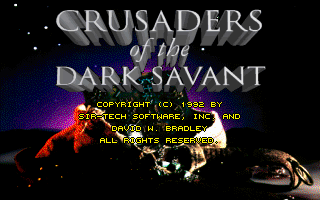 ▶Wizardry 7: Crusaders of the Dark Savant1992MS-DOS / PC


 ▶Legacy of the Ancients1989MS-DOS / PC


 ▶Pakmon2010MS-DOS / PC
 ▶Amberstar1992MS-DOS / PC


 ▶Bluntman and Chronic2003MS-DOS / PC


The rpg games of the 1980s and 1990s asked for graph paper, patience and a tolerance for reading. Character sheets were literal, party management was arithmetic, and a wrong turn in a dungeon could cost an evening. Eye of the Beholder is the clean example of the grid-based dungeon crawler that Westwood built for SSI: four adventurers, step-by-step movement, and a maze under Waterdeep that you map or lose.
Where the genre split
By the early nineties the form had broken into strands that barely spoke to each other. There were the open worlds descended from Ultima, where the interesting verbs were talking, baking bread and stealing; the blobbers with their tight grids and pit traps; and the console lineage built around fixed parties and story beats. Then Origin published Ultima Underworld - The Stygian Abyss, which put a role-playing system inside a freely navigable 3D space and quietly set the template that immersive sims still use. Interplay closed the decade with Fallout, whose skill system finally let you finish a role-playing game by talking, sneaking or being too stupid to be taken seriously — three genuinely different runs from one character sheet.
Everything listed is the original release as catalogued, with its manuals and copy-protection wheels part of the historical record. Where a title is marked as playable, it starts in the browser through an emulator that loads with the page: no installation, no plugin, no registration, no download. Long sessions are expected, so use the in-game save exactly as you would have then.