Three steel balls. That was all you got. Feed another twenty-cent coin or walk away — that was the unspoken contract of every arcade pinball machine in the nineties. Unique Development Studios from Sweden clearly understood that contract when they shipped Absolute Pinball in 1996, because this is a game that does not hold your hand and does not apologize for eating your balls.
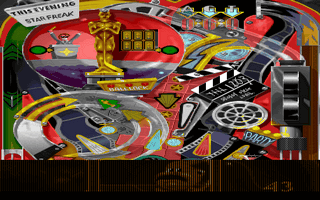
Absolute Pinball is a digital pinball simulation for MS-DOS, offering a small selection of themed tables rendered in pre-rendered graphics that were trying hard to look impressive on whatever monitor you had pushed into the corner of your bedroom. The tables lean into the visual style of the era — loud colors, fantasy and sci-fi flavoring, the kind of aesthetic that screamed "future" in 1996 and looks like a dentist's waiting room today. Each table has its own layout, its own set of ramps, bumpers, and targets to chase down.
The physics are the real question with any pinball game, and here Absolute Pinball sits somewhere in the middle of the pack. The ball moves with reasonable weight to it, the flippers respond without obvious lag, and hitting a clean ramp shot produces that satisfying crack that made you lean into the monitor. What lets it down is consistency — occasionally the ball behaves like it has opinions of its own, sliding past bumpers at angles that feel more like a coin flip than cause and effect. In the nineties you shrugged and chalked it up to the machine being tilted. Today it just looks like imprecise physics code.

The reason people remember this one — or more precisely, the reason a specific subset of DOS collectors remember it — is that it arrived in a crowded market and managed to carve out a modest identity through sheer visual polish relative to its budget. Epic's Full Tilt Pinball and Maxis's 3D Pinball were the giants breathing down everyone's neck, and Absolute Pinball was never going to beat them on table design depth or physics refinement. What it offered was a functional, good-looking pinball experience that ran on mid-range hardware without complaint. That was worth something in 1996. It ages about as well as the hardware it ran on — serviceable, honest, unremarkable.
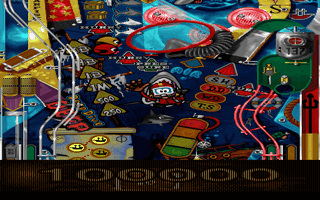
Today Absolute Pinball works best as a twenty-minute session for someone who wants a quick taste of mid-nineties PC gaming without a major time investment. If you grew up dropping coins into real machines and spent your DOS years chasing high scores across every pinball release you could find, there is something here that still scratches that itch — faintly, briefly, like a song you almost remember. Everyone else will probably exhaust the experience inside an afternoon. Run it in DOSBox, turn the speakers up, and try not to tilt.
 old
old


 ▶Doom1993MS-DOS / PC


 ▶Contra1988MS-DOS / PC


 ▶Ultimate Mortal Kombat 31996Super Nintendo


