1992, late at night, monitor glow, cold coffee on the desk beside me, and on screen a tangle of tactical chaos that I dove into with genuine conviction that "I'll knock this out by afternoon." Special Forces let me hold that belief for about an hour.

Sleepless Knights — not Microprose, despite what gets said sometimes — released an action title in 1992 that refused to fit into any single box. On the surface, it's isometric action: you command a small squad of special forces through missions where the primary conversation starter is an automatic rifle. The setting is military, without too much exposition, the style brisk and spartan.
But the game puts on a strategic face. Before each mission, you position soldiers, choose gear, and think ahead at least a little. In action, you switch between squad members and try to outflank enemies rather than just steamroll them head-on. Except in practice, it all slides toward simply shooting and hoping. The AI — yours and theirs alike — makes calls that would disappoint even a fresh recruit. The controls sit at about half-way: keyboard works fine, mouse is more of a bonus feature.
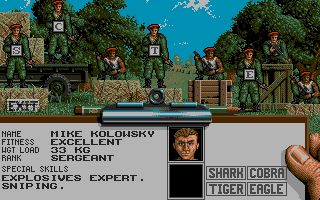
I remember Special Forces as a game that promised more than it could deliver. That hybrid ambition — part Commando, part tactics, part arcade — wasn't a bad bet back then. But the execution is uneven. Graphics hold up for 1992, the Sound Blaster audio was serviceable, but the overall feel is like military training run by a sergeant who read the manuals but never yelled at real recruits. It has the form, but misses the grit.

These days, only a player with a taste for early '90s archaeological layers will fire it up in a browser — someone unbothered by the fact that playing is sometimes more of a fight with the interface than with enemies. Looking for genre gold standard? Look elsewhere. Curious how creators wrestled with tactical action before an engine existed to carry it? Special Forces is honest evidence of that struggle — nothing more, but nothing less either.
 old
old


 ▶Doom1993MS-DOS / PC


 ▶Contra1988MS-DOS / PC


