Year 1990, Origin Systems. A name that meant quality back then — and also meant you'd end up reading under the covers with a flashlight because you just couldn't put the game down. I discovered Bad Blood by accident, and the first hour really threw me for a loop. Not because it was complicated. But because I suddenly found myself playing for the side I'd been hunting down in every other game.
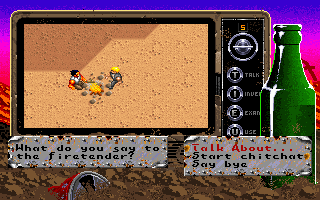
Bad Blood is a post-apocalyptic RPG set in a world where humans and mutants share the ruins of civilization — and don't quite understand each other. You're a mutant. Humans see you as a threat and are preparing to do something about it, their way. Yet the core premise is surprisingly non-violent: your goal isn't to wipe out humanity, but to find a path to agreement, or at least survival. At the turn of the eighties and nineties, this was a genre curveball that hardly anyone noticed.
Gameplay is built on the classic isometric perspective and straightforward dialogue and combat systems typical of Origin's output at the time. Moving through the world is straightforward, battles are turn-based and not particularly deep — I'll admit that right away. The game didn't age well mechanically. What keeps it afloat is that core idea: negotiation, persuasion, finding allies across factions. It's not a complex system, but in the context of 1990, it was an interesting departure from "kill everything that moves".
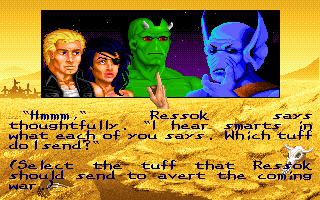
I remember how much I enjoyed reading the dialogue back then — the tone was matter-of-fact, a bit cynical, without unnecessary melodrama. The world felt like a world, not just a backdrop. At the same time, I have to be fair: the game is short, occasionally repetitive, and the graphics were average even for its time. Origin was putting its showcase behind the Ultima series, and Bad Blood felt it — it's an ambitious idea in a slightly underfunded package. It could have been the seed of something interesting. It stayed as a one-off with no sequel.
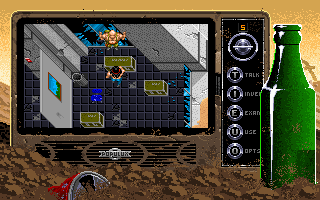
Today I'd recommend it to two types of players: those collecting pieces of gaming history, and those curious about how the RPG genre could have evolved differently. Fire it up in a browser through DOSBox without much fuss, and a few hours spent with post-apocalyptic mutants with peaceful intentions is time better spent than half an evening on anything with microtransactions. At least you'll know why you're struggling — not because the game took your money, but because you underestimated a turn-based battle.
 old


 ▶Dungeon Master1989MS-DOS / PC


 ▶Light Crusader1995Sega Mega Drive

 ▶Doraemon: Giga Zombie no Gyakushuu1990Nintendo NES


 ▶Phantasy Star IV1993Sega Mega Drive
