No graphics. No animations. No pitch, no players, no crowd noise bleeding through a tinny speaker. Just a black screen, a blinking cursor, and columns of numbers staring back at you. That is 1-0 Soccer Manager in its entirety, and somehow, in 1992, that was enough.
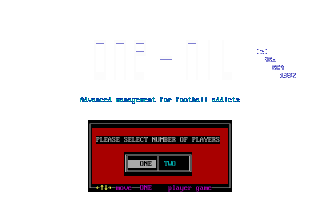
New Era Software's MS-DOS release is football management stripped to bare wire. You run a club — finances, squad, tactics, fixtures — entirely through text menus. There is no story because there does not need to be one. You either turn a struggling side into a championship outfit through careful budgeting and shrewd squad decisions, or you watch the numbers slide the wrong way until the board loses patience. The game does not hold your hand or explain itself at length. It assumes you already care about football and can read a table.
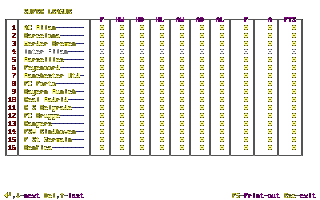
The interface is functional in the way a spreadsheet is functional. You navigate menus, you review player stats, you set your lineup, you simulate the match, and you read the result in plain text. No commentary, no half-time animation of a manager pacing the touchline. The simulation runs invisibly and spits out a scoreline. What makes it work — and it does work, in its own austere way — is that the underlying numbers have enough weight to create genuine tension. You check the result. You did or you did not. The gap between those two outcomes is where the game lives.
What 1-0 Soccer Manager represents is a specific moment in PC gaming when the genre was being invented in real time. Championship Manager was already circling the same territory in 1992, but there was room for several approaches, and New Era's version is the spartan one. No concessions to spectacle. Later games would add newspaper headlines, agent negotiations, training ground micromanagement — layers that made the genre richer but also heavier. This one is just the skeleton, and thirty-odd years on the skeleton is still legible. It has aged the way a set of hand-drawn architectural blueprints ages: the craft shows, the ambition is clear, but nobody is living in the building.
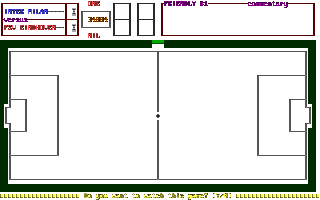
Today it will appeal to exactly one type of person: someone who wants to see where this all started, or someone with a genuine fondness for the era of text-only software where imagination did the rendering. If you grew up navigating DOS prompts by instinct, the interface will not intimidate you. If you need a match engine with player icons jogging across a green rectangle, look elsewhere. Play it in the browser for twenty minutes and you will understand, concretely and without nostalgia clouding anything, what football management was before it became a lifestyle product.
 old
 Warhammer 40,000: Black Templars T ShirtView on eBay »
 Workshop Warhammer 40k: Primaris Redemptor Dreadnought MiniView on eBay »


 ▶Chess1998Sega Mega Drive


 ▶Big Business1990MS-DOS / PC


