A surgeon touches the brain and everything goes to hell. In Life & Death 2, it's not about drama or story – it's about keeping your patient alive through the surgery you're performing right now. This 1990 simulation puts you in an operating room with instruments you don't understand and a brain you won't comprehend, and trust me, the patient will notice.

You're sitting at a modern computer, holding a arsenal of tools in your hands, and the screen is drowning in the bloody details of neurosurgery. The game isn't a graphics showcase – it's pure functionality, value tables, alarming sounds, and time pressure. Your goal is simple: remove the tumor or treat the affliction without letting your patient die on the table. Every move must be calculated. No rushing, no instincts. Just surgical decision-making and silent prayers that you won't lose your mind to beeping sounds and a blizzard of data.
The mechanics are raw – you navigate through a 3D brain model, operate with various instruments, and monitor the patient's vital signs. The game gives you a lesson in anatomy and decision-making pressure all at once. It's not for relaxation. It's not even for fun in the traditional sense. It's a simulator that wants you to feel the weight of responsibility for a human brain. And that responsibility starts pressing on your heart by minute two.
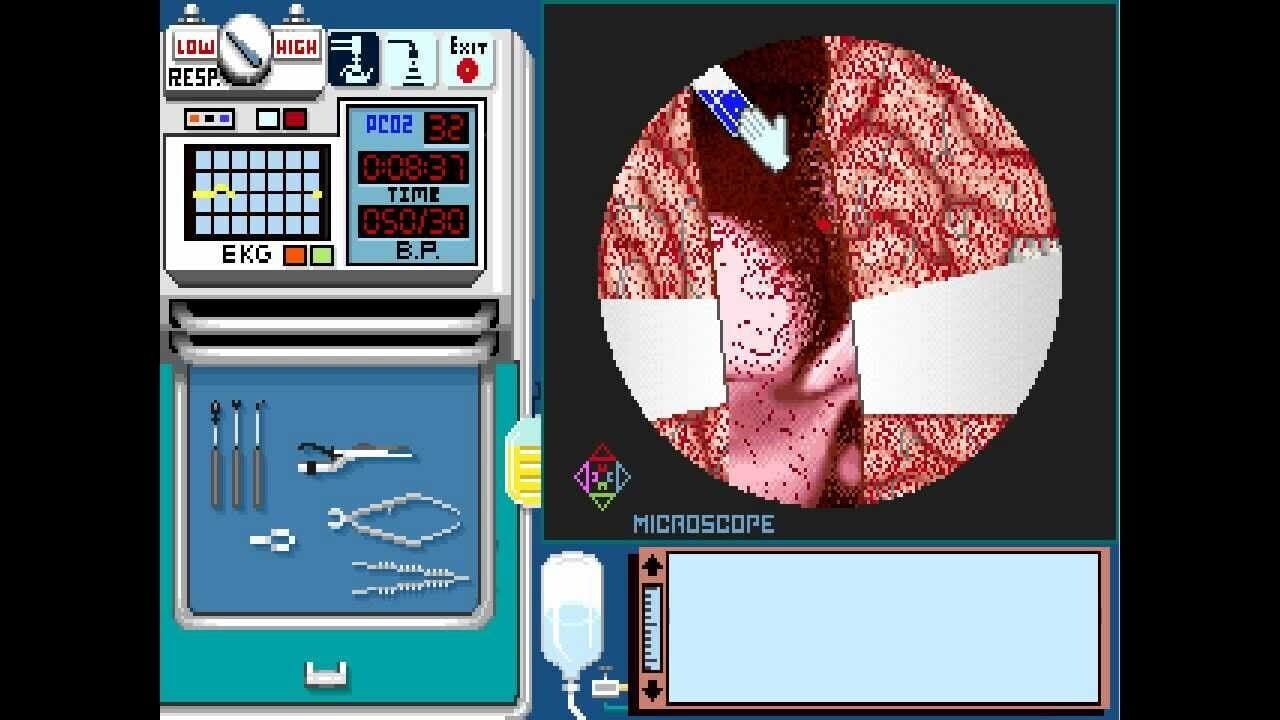
Life & Death 2 was part of a wave of educational simulators that Microsoft DOS sold to medical schools and medicine enthusiasts. Today it looks like a curiosity – obsessively detailed, visually bland, but with an odd magnetism. There's no room for mistakes here, and the game reminds you of that every second. It's only aged visually. Its frustrating approach to gameplay remains unchanged.

If you want to feel what it's like to be responsible for something real without actually killing anyone, give it a shot. It's not a game everyone would play – and that's its charm. You'll find it in browsers among collectors of retro medical simulators, where it belongs.
 old
old


 ▶Pinball Fantasies1992MS-DOS / PC


