Shareware floppy, a plain gray desktop, and a game that looked like it was knocked together in a weekend. Brix had no business eating three hours of my afternoon. And yet.
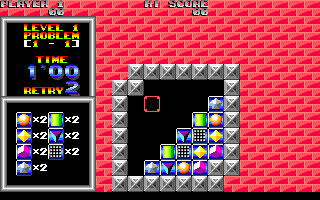
Brix is a DOS puzzle game from 1991, written by German developer Michael Riedel and distributed as shareware. The playing field is filled with colored blocks, and your job is to clear them. The core mechanic revolves around shooting blocks horizontally across the field — when two blocks of the same color collide, they disappear. Chain enough of those together and the level clears. Simple to describe, genuinely tricky to execute.
The controls are basic keyboard stuff, nothing fancy. You position your launcher, you fire, and you watch what happens. What makes it interesting — and occasionally maddening — is the spatial logic underneath. Every shot changes the state of the board, and what looks like a clean move can box you into a dead end two steps later. There is no undo. There is no hand-holding. The game gives you the field, the blocks, and the implicit expectation that you will figure it out yourself. For 1991 shareware, that is a reasonable deal.
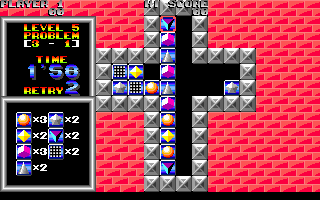
What Brix did well was the same thing a lot of small shareware puzzlers did well back then: it gave you a concrete problem with clear rules and let you sit with it. No story, no cutscenes, no reward beyond the quiet satisfaction of watching the board go empty. The visual style is about as spartan as it gets — colored blocks on a dark background, thin borders, maybe a score counter. The sound is the kind of thing you remember less as music and more as a series of beeps that somehow did not drive you insane. It aged exactly as you would expect: fine on its own terms, invisible next to anything modern.
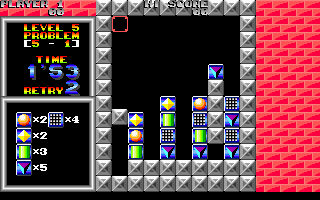
Today Brix is a curiosity rather than a destination. If you have a soft spot for the particular flavor of DOS shareware logic puzzles — the ones that came on a single floppy and asked nothing of your hardware — then an hour with Brix still holds up. It is honest about what it is. The puzzle design is not deep enough to sustain a long session, but it does not pretend otherwise. Run it in a browser via DOSBox, see if the first few levels click for you, and you will know within ten minutes whether this is your kind of thing. Most people will close the tab. A few will suddenly realize it is midnight.
 old
old

 ▶Vlak1993MS-DOS / PC
 ▶Where in the World is Carmen Sandiego1991MS-DOS / PC

 ▶Teenage Queen1988MS-DOS / PC

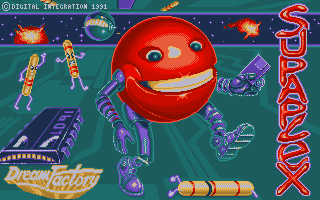 ▶Supaplex1991MS-DOS / PC


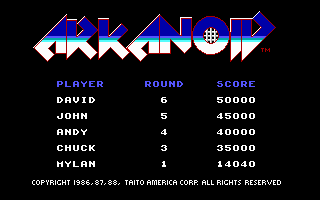 ▶Arkanoid1988MS-DOS / PC
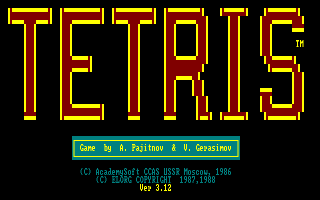 ▶Tetris1985MS-DOS / PC
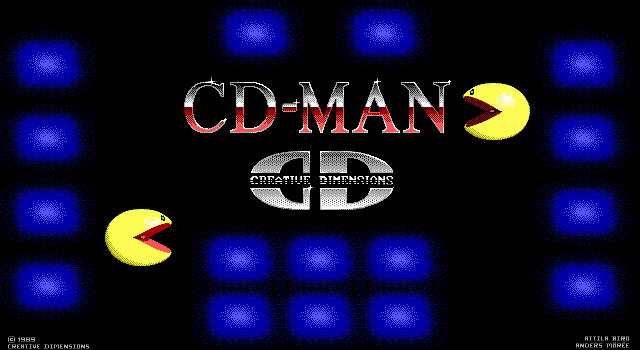 ▶CD-Man1989MS-DOS / PC

 ▶Sokoban1984MS-DOS / PC
 ▶Amazing Maze1983MS-DOS / PC