Soul Edge, released by Namco in 1996, is the arcade weapon-based fighter that launched what would become the Soul series — better known today through its Soul Calibur successors. Arriving in the golden age of 3D fighting games, it distinguished itself from the punch-and-kick crowd of Tekken and Virtua Fighter by arming every character with a weapon, building its combat around the reach, timing and clash of blades.

The roster of swordsmen, ninja and warriors battled over the cursed sword Soul Edge itself, each fighter's weapon giving duels a different rhythm and range than the fist-fighting competition. Its standout mechanic was the eight-way movement and the emphasis on stepping, guarding and weapon clashes, along with a guard-gauge system that punished pure turtling — ideas the series would refine for years. In some regions it was known as Soul Blade.
Compared with the sleek Soul Calibur that followed just two years later, this first outing looks rougher and plays a little stiffer, and it's easy to overlook now. But it's a genuinely important game historically, the foundation of one of fighting's most respected franchises, and it captures that mid-90s moment when developers were racing to figure out what 3D combat could be. For fighting-game fans it's well worth experiencing where it all began.
Soul Edge from Namco is the foundation of one of the most distinctive fighting series and the game that proved weapons in a fighter are not decoration. When two people fight with blades, everything changes: distance, timing, and what defence even means.
Namco was making Tekken at the time, and Soul Edge is its counterweight. Where Tekken builds on limbs and close-quarters exchanges, Soul Edge builds on reach, and on the fact that one well-timed cut decides more than five punches ever will.
How it plays
The base is a horizontal slash, a vertical slash, a kick and block. The distinction between horizontal and vertical is the heart of it: vertical attacks are faster and more precise, horizontal ones cover more ground and are harder to evade. The whole match is a tug of war over which type suits the current moment.
Blocking is active and costs you position. Weapons stop dead when they meet, and the game highlights that moment — the instant two blades clash is the instant somebody gains initiative. A player who can deflect an attack at the right time opens space for their own string.
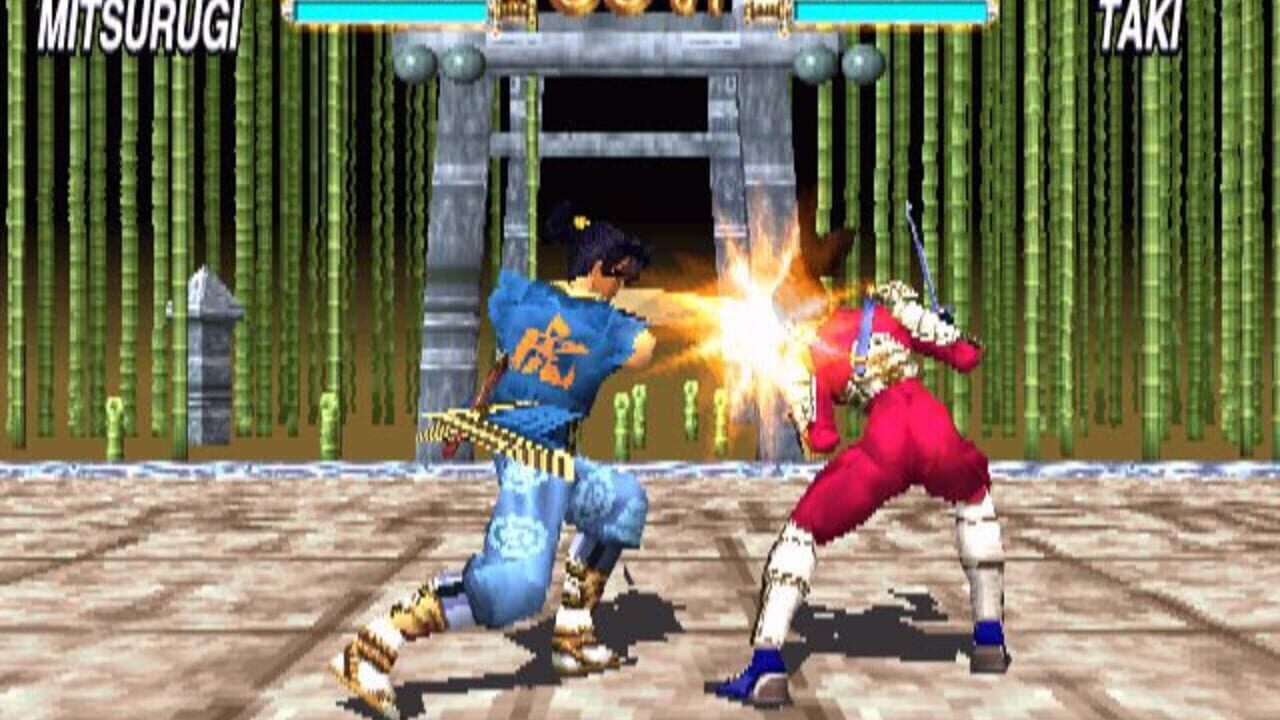
The arena edge matters enormously. Falling out loses the round instantly, so pushing an opponent towards the rim is as valid a strategy as depleting their health. Positioning is therefore part of the fight and can never be ignored.
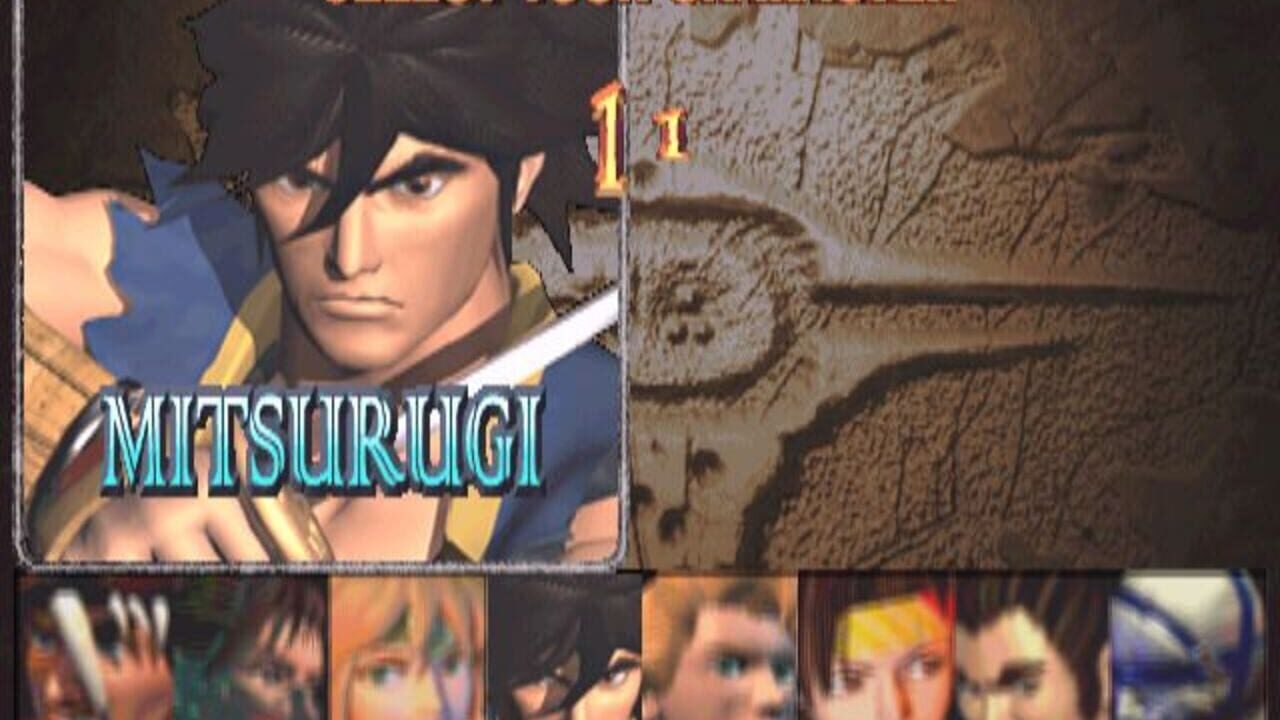
Characters differ by weapon more than by style. A long sword, short blades, a spear, a katana — each has its own ideal distance and the game forces you to find it. A short-weapon fighter must get inside; a long-weapon fighter must keep the opponent out.
The single-player route is a ladder with individual endings, layered with a system that lets your weapon change along the way. It is not deep, but it gives you a reason to run the ladder more than once.
What aged well and what did not
Weapon combat aged well. Blade clashes are legible and satisfying, and splitting attacks into horizontal and vertical is a principle still in use today. The use of the arena aged well too — the threat of a ring-out keeps the fight moving.
The graphics aged badly. These are first-generation 3D fighter models and they look crude next to their successors. Lateral movement aged badly as well; it is not yet developed into a real mechanic, so the fight stays flatter than a weapon-based game would naturally want.
Where to start
Take a character with a long weapon and learn to keep opponents at range. Alternate horizontal and vertical cuts and watch for the moment the opponent stops blocking. And always know where you are in the arena — most losses begin with a player who forgot about the edge.
For a direct comparison, the catalogue has Tekken and its more developed sequel Tekken 3. For weapons handled in an entirely different spirit, there is Mortal Kombat 4.
 old

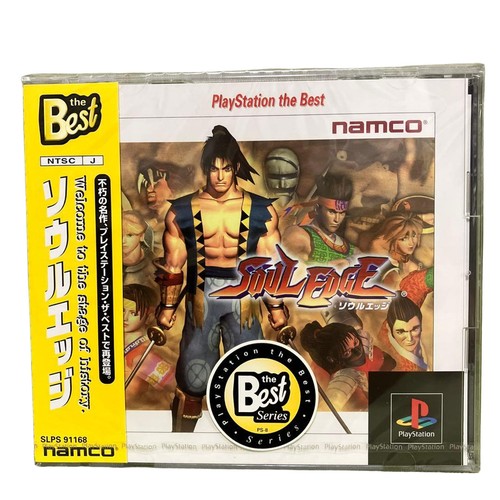 Namco Soul Edge PS1 PlayStation The Best Sealed NTSC-J SLPS-91168 Japan ImportFactory sealed originalAdView on eBay »
 NEW SEALED Soul Edge Playstation Ps1 fighting game unopened 1996 Soul CaliburFactory sealed original from 1996AdView on eBay »
 Soul Edge, Japanese, PlayStation, pre-owned, CIB, Pristine, Collector QuailtyCollector's editionAdView on eBay »
 Soul Edge Joystick Limited Edition Box PS1 Playstation W/Bonus JP Import UnusedCollector's editionAdView on eBay »
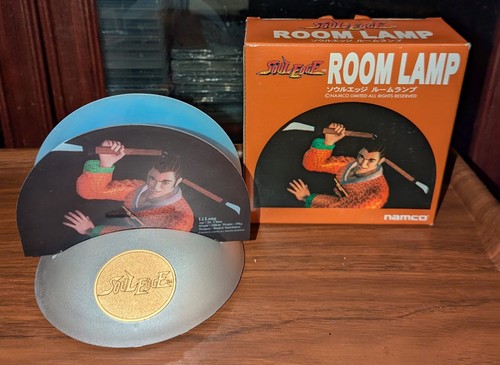 RARE Soul Edge Li Long Room Lamp NAMCO Soul Calibur Vintage Promo Japan PS MerchFor collectorsAdView on eBay »
 SOUL EDGE Original Soundtrack CD Namco Fighting Game Music Japan RetroFor collectorsAdView on eBay »


 ▶Bubble Bobble1989MS-DOS / PC
