That alarm sound. A harsh, rasping shriek through the Sound Blaster speaker that meant you'd walked one pixel too far into the searchlight beam and now every guard on the island knew exactly where you were. Alcatraz had a way of making you feel genuinely stupid for the most microscopic mistake.
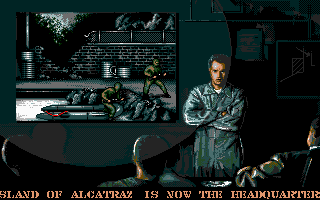
Released in 1992 by the relatively obscure 221B Software Development and published by Infogrames, Alcatraz drops you onto the infamous island prison with one straightforward objective: get out. The game blends top-down stealth and action across a series of screens representing the prison complex, its yards, fences, and guard towers. The setting was well-chosen — everybody knows the name, everybody knows escaping is supposed to be impossible, and that tension transfers surprisingly well to a DOS game running on a 486.
The core loop is patience and observation. Guards move in patterns, searchlights sweep predictable arcs, and you learn to read the rhythms before committing to a move. When it works, it feels methodical in a satisfying way — like you've genuinely outsmarted the system. When it doesn't, it feels like the game cheated, even if it probably didn't. The controls are functional rather than elegant, and some of the hit detection has the kind of generosity that only goes one direction — against you. Getting caught feels instant. Getting past a difficult section feels earned.
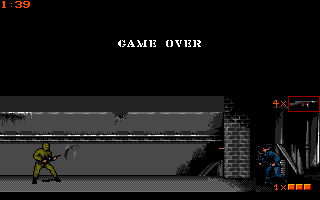
What Alcatraz had going for it was atmosphere on a tight budget. The visuals were never impressive even by 1992 standards, but the sound design and the constant low-level dread of being spotted kept you leaning into the monitor. It understood that a prison escape isn't exciting because of explosions — it's exciting because of the spaces between them. That's a harder trick to pull off than it sounds. The game hasn't aged particularly gracefully in terms of interface or visual clarity, and some sections require a tolerance for trial-and-error that modern players might find less charming than punishment.
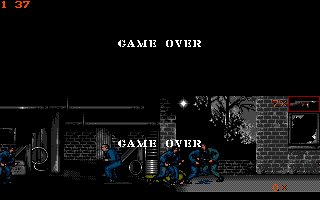
It's not a lost masterpiece. Alcatraz sits comfortably in the category of competent, atmospheric mid-tier releases that kept the lights on at Infogrames while their bigger titles got the attention. But it scratched a specific itch — slower, more deliberate, built around tension rather than reflexes. If you remember lying awake staring at a monitor because one more attempt felt possible, this is worth revisiting in your browser. Just don't expect the searchlight to care how close you were.
 old
old


 ▶Doom1993MS-DOS / PC


 ▶Ultimate Mortal Kombat 31996Super Nintendo

 ▶Contra1988MS-DOS / PC