Licence to Kill is not a good game. Let's get that out of the way. It's a choppy, disjointed mess of an action title that somehow managed to make Timothy Dalton's grittiest Bond outing feel like a wet Tuesday afternoon in a car park. And yet here I am, still thinking about it.
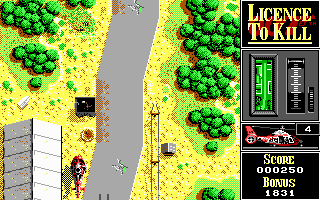
Quixel's 1989 DOS release follows the film almost beat for beat — Bond goes rogue after the CIA lets drug lord Sanchez walk, and he spends the next two hours being very angry about it. For a Bond movie, Licence to Kill is unusually dark and personal. The game tries to bottle that, spreading the action across multiple stages that pull from key sequences in the film: underwater sections, vehicle chases, on-foot shooting. It's ambitious on paper for something that fits on a handful of floppies.
In practice, the ambition outruns the execution by a considerable distance. The different segments play nothing alike, and none of them play particularly well. The shooting is stiff, the controls respond with the enthusiasm of someone who's been told it's their job but not why, and the hit detection belongs in a different, worse era — which is saying something for 1989. The vehicle sequences have a certain raw momentum to them, and for about ninety seconds they feel like something. Then you crash into an invisible wall and the feeling passes.
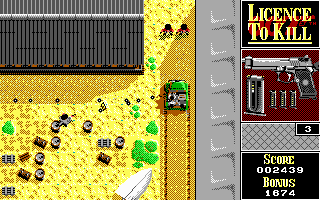
What the game did get right, accidentally or not, is atmosphere. The CGA and EGA visuals are about what you'd expect, but the music and sound through a Sound Blaster had a mean little edge to it. It felt like a budget thriller rather than the usual Bond glamour, which actually suited Dalton's version of the character. There's something almost appropriate about a game this rough around the edges representing the Bond film that was itself rough around the edges — leaner, meaner, less interested in being charming. Whether that was a deliberate design choice or just the result of a tight deadline and a licensed property, I couldn't tell you.
It aged badly, but not in the interesting way that some old games do. It aged badly the way cheap construction ages — the cracks were always there, you just didn't notice them when you were twelve and grateful for anything with a spy on the box. By modern standards the game is frustrating to parse, the stages feel unfinished in places, and there's no real sense of progression that earns the difficulty it throws at you.
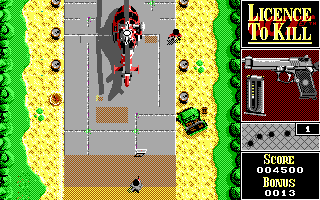
If you're coming to this through the browser emulator out of Bond completionism or genuine curiosity about what licensed games looked like at the tail end of the eighties, it's worth thirty minutes of your time. Maybe forty if you want to see the vehicle stage. After that, you've seen what there is to see. It's a time capsule, not a recommendation.
 old
 Nintendo Goldeneye Oddjob Themed Cheater T-Shirt tshirtView on eBay »
 007 Agent Under Fire James Bond Fold Out Poster - MINTView on eBay »


 ▶Ghosts N Goblins1987MS-DOS / PC


