The Spectrum's football games of the eighties split into two tribes: those that pretended pixels could run, and those that simply surrendered to math. Cup Football belongs firmly in the second camp, and honestly, it's the braver choice. Simon Conway's 1988 creation ditches any illusion of animated players and instead serves up pure tactical simulation — turn-based, paper-thin interface, all calculation and no spectacle.

You manage a team through a cup competition, making decisions that actually matter: formation, tactics, substitutions, training focus. The match itself unfolds like reading a telegraph from a distant stadium — text updates, numerical outcomes, the occasional dramatic result. There's no rushing; every action belongs to you or the AI in strict alternation. It's more akin to playing postal chess than watching football, which is precisely the point.
The appeal is cerebral. You're not grinding through animations or wrestling with spotty collision detection — you're pure strategy. Do you go defensive and absorb pressure, or push forward and risk the counter? How much stamina can you afford to burn chasing a goal? The computer doesn't cheat; it simply executes its own logic, and you either out-think it or you don't. Controls are menu-driven, keyboard navigation through options, utterly transparent. What you see is what you calculate.

The drawback is obvious: it's dry as a pitch in August. There's no drama in a text line saying "Goal!" There's no tension in watching momentum shift. For players hungry for visual feedback or arcade thrills, this is penance, not entertainment. The Spectrum's technical limitations forced honesty here, and honesty can be austere.

What endures is the game's commitment to its own logic. It doesn't apologize for the lack of animation or bemoan the hardware. Instead, it builds something clean and functional — a football manager in its purest distilled form. No filler, no pretense. If you approached football as a tactical puzzle rather than a spectacle, Cup Football still delivers that puzzle intact, three decades later.
 old
old

 ▶FA Cup Football1986ZX Spectrum
 ▶Kick Off1989ZX Spectrum
 ▶ATP Tour Simulator1990ZX Spectrum
 ▶Poke Alex in the Eye II1998ZX Spectrum
 ▶St. Andrews GolfZX Spectrum
 ▶Tour de France2025ZX Spectrum
 ▶Video Pool1985ZX Spectrum
 ▶Video Olimpic1984ZX Spectrum
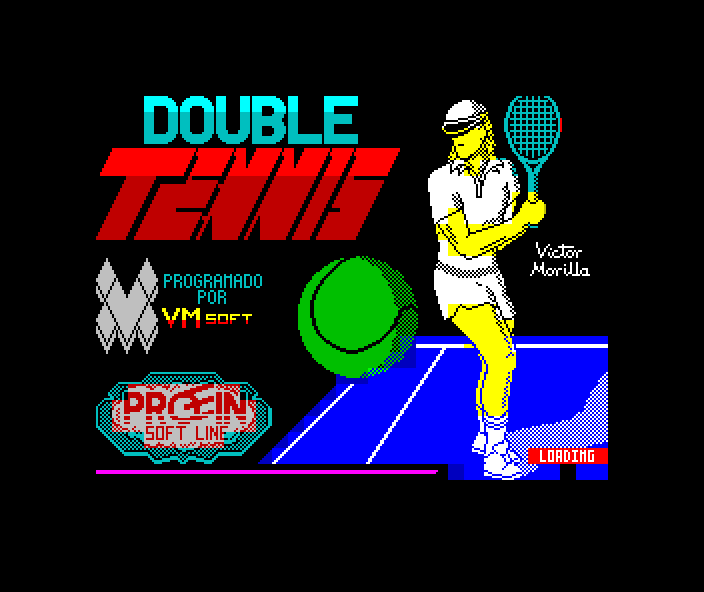 ▶Double Tennis1990ZX Spectrum


