Year 1992, a British studio with a name that sounds like fiction, and a game about a murder your own father is implicated in. I discovered Crime City by chance back then — no advertising, no magazine review, just a floppy disk from a friend's copying shop. That was pretty much the standard distribution scheme at the time.
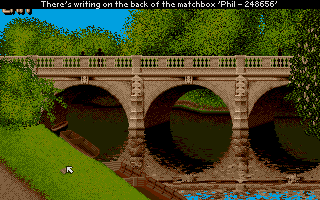
You play as Steven White, an amateur investigator with a personal stake: someone committed a murder, and your father is accused of it. The task is straightforward — find the real culprit before things get complicated. No detour into fantasy worlds, no space-saving-the-universe stuff. Just a criminal case, a city, and you.
The interface is point-and-click, controls simple to the point of austerity — and that wasn't obvious back then. 1992 was marked by a clash of different approaches to adventures, from word parsers to fully graphical systems in the style of Sierra or LucasArts. Crime City took the accessibility route: click, explore, talk, take. No tedious command-clicking. Whether that was intentional or the result of a limited budget from a British indie studio, I'll leave that to you.
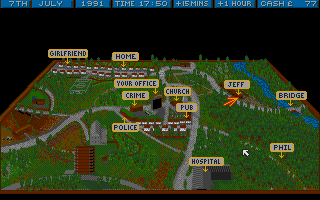
Where the game stands or falls is atmosphere and the written story. British crime adventure from that era had a specific feel — more civilized, less Hollywood than American competition. Crime City doesn't dump ten locations on you at once; it keeps you in a relatively narrow environment and bets on investigative logic. Whether the script actually works or just pretends to depends a lot on how much patience you have with a slightly faltering pace. Some parts of the dialogue have aged more than others — and I'm saying that carefully.
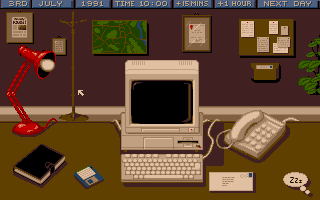
Today it's mainly a collector's item. If you enjoy browsing through a catalog of forgotten British adventures from the early nineties and you're looking for something that isn't Monkey Island or Broken Sword, Crime City is a solid stop. It's not a breathtaking gem, but it's honest work with an interesting crime framework. Run it in your browser via DOSBox today and you'll fire it up in a minute — and that's honestly the best argument to give it a shot.
 old
old


 ▶Amazing Spider-Man1989MS-DOS / PC


 ▶Fantasy - An Adult Game1987ZX Spectrum


