Ulasan ini belum diterjemahkan — kami menampilkan versi asli (English).
There are games that simply got lost. Not because they were bad, but because nobody outside Scandinavia knew they existed. Jungle Jack from 1995 is exactly that kind of case.

It's a 2D platformer by Sweatbox Animation, set — as the name suggests — in the jungle. You play as a character named Jungle Jack, and the opening animation itself hints that the creators had ambitions to craft something with atmosphere and visual style. The camera glides over the treetops, the sun rises over the rainforest. For a mid-range DOS game in 1995, a solid first impression.
Gameplay-wise, it's standard genre craft — jumping over obstacles, dodging enemies, collecting items. Nothing that would turn the platformer world on its head back then. The controls are straightforward, which was always a bit of a gamble with DOS action games — it depended on whether the developers understood that jump response had to be readable. It worked out decently here, though Jack doesn't have the precision of Turrican or Jazz Jackrabbit. The game feels like it was made with genuine enthusiasm, but on a budget that was strictly Scandinavian — meaning limited.

Why people remember it is actually a mystery, because most of the world doesn't remember it at all. On international retro gaming forums it pops up occasionally as a curiosity — a game that never made it beyond its home market borders. The visuals have color and character animations work, but the game content is short and doesn't replay well. In 1995 there were plenty of platformers with more substantial content on the market. Jungle Jack simply didn't have that one thing — whether it's level design, story, or mechanics — that would make it more than a local title.
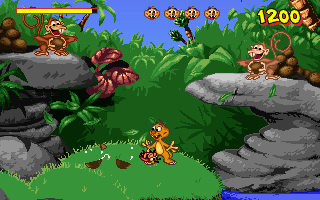
Today, you'll probably play it if you're systematically working through the forgotten DOS catalog, or if you want to see what platformers looked like on the fringes of nineties European production. No frustration from unbearable difficulty, no major technical roadblocks. Three-quarters of an hour of lighter nostalgia, after which you better understand why some games stayed where they are.
 old
old


 ▶Doom1993MS-DOS / PC


 ▶Contra1988MS-DOS / PC


 ▶Ultimate Mortal Kombat 31996Super Nintendo