oldgame.cz — old & retro games online free
EN
95 Desktop

Qbert

– MS-DOS
Qbert
ControlsNum7/Num3 moveEnter useEnter/Space start/selectEsc menuMS-DOS

1984 · Arcade · MS-DOS / PC

Game info_□✕

About Qbert

When I first saw those colorful pyramids bouncing across the screen, I didn't realize I'd be entertained for a solid thirty minutes straight. Q*bert is simply genius.

Qbert – screenshot 1

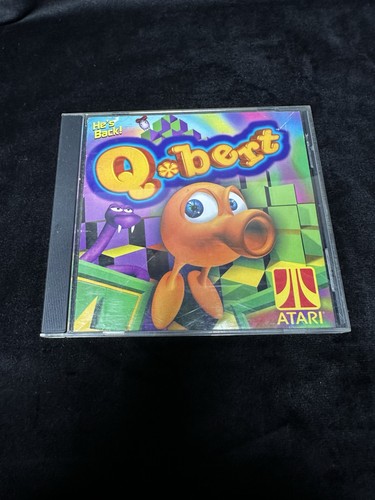
It's an arcade classic from the early eighties that made its way to PC in 1984. You play as a peculiar creature (I sometimes say it looks like a soccer ball with a mouth), standing on an isometric pyramid. The goal is straightforward — you change the color of every tile you walk on, and once all tiles have changed color, you move to the next level. Sounds simple. Reality is far more cunning.

You move in four directions and fall downward, as if bouncing on a soft structure. While you're trying to reach every tile, various enemies come rushing at you — living lines, falling balls, hostility on two legs. They catch you, and it's over. Meanwhile, you're trying to navigate isometry, which looks strange today, but back then understanding geometry was the backbone of the arcade experience. The further you get, the trickier it becomes — enemies move faster, there are more tiles, their movement patterns turn predatory. By the fifth level, it's not just about reflexes anymore; it's about genuine route planning.

Q*bert became a cult classic because the feel of playing it is precise. It's not about shooting or running; it's about spatial thinking and timing. Every jump carries weight, every mistake is punished instantly. In the nineties, I kept coming back to it because it was simply gripping — each attempt matters, and difficulty ramps up without pretense.

From today's player's perspective, the game feels like an arcade relic — no story, no motivation, no explanation. Controls are precise but rigid. It lacks that temperature curve it had on the original arcade cabinets. Still, it's worth playing in your browser — it's a lesson in how to make a game that keeps you on edge with nothing but space and threat. No effects, no words. Just that.

Qbert FAQ

Can I play Qbert online for free?
Yes — you can play Qbert right here in your browser for free, with no installation and no plugins, on both desktop and mobile.
Can I download Qbert?
Yes, Qbert is available to download here — use the Download button on this page.
What platform does Qbert run on?
Qbert is a MS-DOS / PC game from 1984.
When was Qbert released?
Qbert was released in 1984.
What genre is Qbert?
Qbert falls under: Arcade.
How do I save my progress in Qbert?
Save inside the game itself — via its own menu, or F2/F3. And if you log in (free), your position is also stored in the cloud, so you can continue on another computer or phone.
Is it legal to play Qbert online here?
You play it in your browser via an emulator. For how we handle abandonware and copyright, see our "Is it legal?" page.
How do I control Qbert?
The controls are in the Controls section on this page. The keyboard is usually all you need — arrow keys to move and Ctrl, Alt or Space for actions.
Can I play Qbert on mobile?
Yes — it runs right in your browser on phones and tablets too. Just tap Play, nothing to install.

Comments on Qbert

(0)

No comments yet. Be the first!

Gaming platform – MS-DOS / PC_□✕
About the platform 1981–2000

For two decades MS-DOS was the main gaming platform on PCs. Games launched from the command line and used sound cards like Sound Blaster or AdLib. DOS is the home of legends such as Doom, Prince of Persia and Commander Keen.

Maker IBM PC / Microsoft  ·  Years 1981–2000

Here on oldgame.cz you play it right in your browser via the js-dos emulator — no install, no plugins, on desktop and mobile.

Recommended controls
These games are controlled with the keyboard (see the controls table next to the game). A USB joystick/gamepad can make some titles more comfortable, but is not required.


» More about this platform on Wikipedia

Games similar to Qbert

_□✕

More Arcade games

_□✕
» Random
🚪 Classic site