Free-to-play in 2006 wasn't a business model. It was a red flag. So when Monolith stripped the multiplayer out of one of that year's best shooters and handed it out at no cost, nobody quite knew what to make of it.
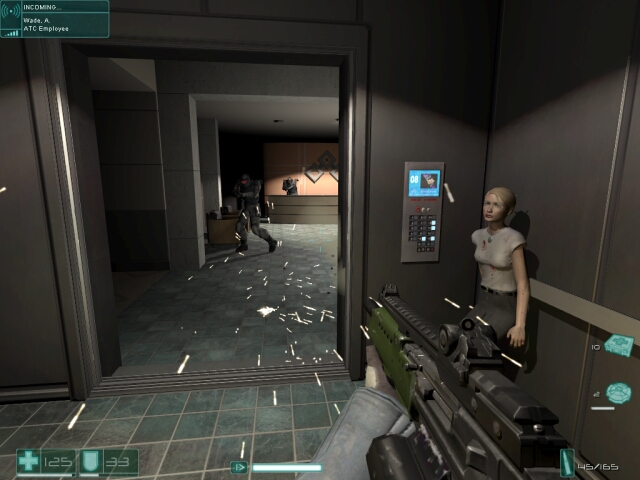
F.E.A.R. Combat is exactly what it says: the competitive multiplayer component of F.E.A.R., packaged as a standalone title. No Alma, no slow-motion hallway scares, no story. Just soldiers shooting each other in industrial corridors with very good lighting. Standard deathmatch modes, team variants, the usual lineup you'd expect from a mid-2000s PC shooter. The paranormal angle that made the base game memorable is entirely absent here — this is straight arena combat, and it knows it.
What it had going for it was the engine. F.E.A.R. ran on technology that made other shooters look like they were built on a Tuesday afternoon, and Combat inherited all of it. The gunplay had weight to it — weapons kicked, bodies reacted, and the slow-motion reflex mechanic carried over into multiplayer in a way that felt less gimmicky than you'd expect. Landing shots felt satisfying in a way that wasn't universal in 2006. Movement was tight. The maps were functional if not particularly inspired — lots of grey concrete and catwalks, the kind of geometry that was clearly designed around cover and sightlines rather than atmosphere.
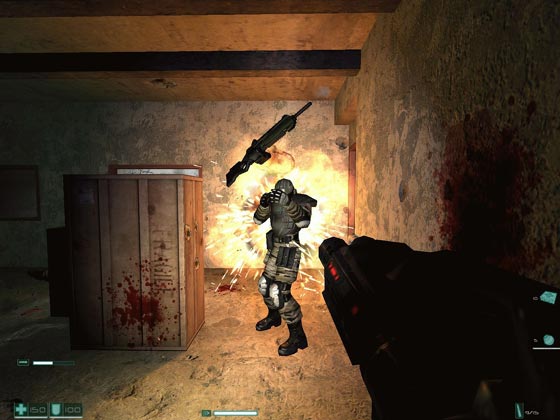
The problem was always the same one that kills free multiplayer titles: population. F.E.A.R. Combat launched with a reasonable crowd, but without a persistent hook — no progression system, no unlocks, nothing to chase — players drifted. The servers that Monolith ran officially have long since gone dark. What's left today depends entirely on community infrastructure, fan-run servers, and whether anyone bothered to show up. That's a generous arrangement of variables. The gesture was genuinely unusual for the time, and the execution was competent, but "competent free multiplayer shooter" isn't a sentence that builds a legacy.
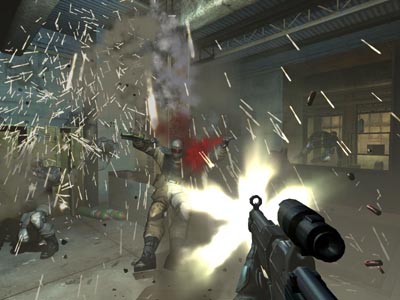
If you want to feel what online PC shooters were like in that specific window between Quake's dominance and Call of Duty 4 changing everything, Combat is an honest artifact. The mechanics hold up better than the context does. Running it today means wrestling with compatibility layers and hoping a server has a pulse, which is its own kind of retro experience. For someone who was there — who remembers downloading this over a connection measured in kilobytes per second and thinking the graphics were almost obscene — it's worth an hour of archaeology. For everyone else, you're probably better off with the original F.E.A.R., where at least a small girl in a red dress will make you regret having peripheral vision.
 old


 ▶Bubble Bobble1989MS-DOS / PC


 ▶Ghosts N Goblins1987MS-DOS / PC


