Sharp verdict right off the bat: Budo - The Art of Ninja Combat is required reading for fighting game connoisseurs of the nineties who aren't into Mortal Kombat. These games were born in scrappy conditions, on shoestring budgets, and yet they had something distinctive about them. This is exactly one of those.

It's a straightforward fighter with a ninja theme and Oriental martial arts. Two players against each other, in arenas without any flashy magic, without special abilities. Just two people (or creatures) in a traditional brawler without modern nonsense. Content is minimal — a few characters, a few levels — but the appeal lies in what comes from it: the crunch of combos, drilling your moves, reading your opponent.
The mechanics are straightforward. Punches, kicks, blocks. No special moves requiring three buttons at once. The character animations are stiff, movements slow, but that's precisely where you see the age. The controls match the era — responsive, without unnecessary fuss. The echo of impacts and kick sounds are typical of the mid-nineties, when every PC sounded like an industrial zone at dawn. The graphics are modest, the playable figures are pixelated and unpretentious — that's where their charm lies.
Today you look at it like a monument to an era. It wasn't refined, it wasn't flashy, it was practical. Fighting games of that time weren't about being the fastest or most precise — they were about spending a Friday night at a buddy's place with a beer and figuring out who you could beat. Budo fits that category perfectly. It's no Street Fighter, but it's no disaster either.
Playing it today means returning to a time when fighting games weren't made with four levels and eighty MB of animation. Half an hour in your browser gives you an idea of what people played when Quake and Doom dominated offices and the gaming industry still wasn't quite sure what it was doing next. On retro sites you'll find emulation, and a few minutes will tell you everything you need to know.
 old
old


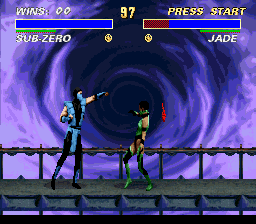 ▶Ultimate Mortal Kombat 31996Super Nintendo
 ▶Contra1988MS-DOS / PC
