Sometimes all it takes is to hear that sound — gunfire, explosions, monotonous music bleeding out of a Sound Blaster — and your hands automatically reach for the arrow keys and Ctrl. I first saw Raiden in an arcade, where the kid next to me devoured it in five minutes and twenty crowns. At home on PC, I got my revenge solo, for free, for as long as it took.
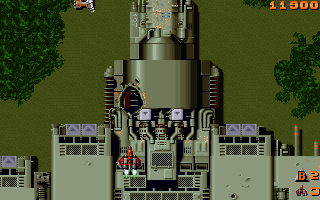
Raiden is a vertical shoot 'em up, originally a Japanese arcade cabinet by Seibu Kaihatsu, that arrived on PC in the mid-nineties. The setting is classically economical: aliens have invaded Earth, you're sitting in a combat aircraft, and your job is to shoot everything that moves. Tanks, ships, helicopters, planes, ground bases — it all falls under your cannons. The plot won't hold you for even a minute, which is exactly right.
The game is controlled simply: movement, primary weapon, bomb. The arcade origins are felt in every detail — the screen scrolls relentlessly downward, enemies come in waves, power-ups drop from shattered convoys. Weapons can be upgraded by collecting colored crystals, and the choice between lightning and spread shot adds at least some basic tactical decision-making to the game. The difficulty is decent — not brutal like Japanese bullet hell games, but enough to bring you to your knees by the final levels. Two players on a single keyboard didn't work entirely smoothly though; the hardware of the time was more of a fivefold tragedy for that.
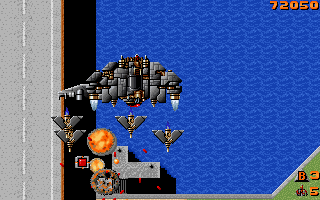
What Raiden brought to PC gamers in 1994 was pure arcade experience at home, without needing to go to an arcade. The port isn't perfect — the arcade original had slightly smoother animation and better sound — but it ran on a 486, looked acceptable, and played exactly as you'd expect. Visually, the game today looks like the output of a random military hardware generator, the music is a repeating loop that burrows into your brain after ten minutes in a way there's no escape from. Some love it, others don't.
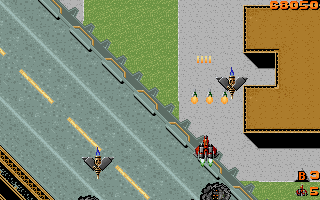
Today Raiden appeals mainly to those who want a short, focused gaming session without story, tutorials, and open worlds. Twenty minutes, a few lives, a nice string of explosions. As a retro experience in a browser it works well precisely because you don't expect more from it than what it offers — and it delivers exactly that much.
 old
old


 ▶Doom1993MS-DOS / PC


 ▶Contra1988MS-DOS / PC


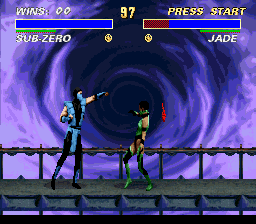 ▶Ultimate Mortal Kombat 31996Super Nintendo

