That helicopter on the screen isn't going anywhere until you figure out the controls, and brother, that's half the battle right there. Airwolf for the NES isn't a flight sim in any serious sense—it's an arcade shooter wrapped in the skin of a combat helicopter, tied to a TV show nobody remembers anymore, and dumped on cartridge by Acclaim in 1988. Krome Studios Melbourne did their best, but their best was fighting against hardware limits and a premise that sounded cooler on paper than it plays on screen.

You're piloting the titular chopper through a series of missions, mostly blasting ground targets and dodging enemy fire. The game switches between a top-down view for ground assault and a side-scrolling perspective for different segments, which sounds varied until you realize both feel sluggish and imprecise. Your helicopter moves like it's carrying actual weight, which would be authentic if authenticity were the goal. It isn't. You want responsiveness. You want to feel the machine respond to input. Instead, there's this lag between what you're doing and what the pixel helicopter actually does.
The targeting reticle is your constant companion, and you'll spend a lot of time lining it up to hit stationary bunkers and slow-moving tanks. Missiles fire at what feels like a deliberate pace, and enemy fire comes in patterns that are learnable but tedious. The music chugs along adequately—nothing offensive, nothing memorable. It's Acclaim's house style: competent, corporate, soulless.
Here's what sticks: this was a licensed game made to exploit a show's name recognition, and it shows. The problem isn't that it's bad on some objective scale—it's that it's painfully mid. Not broken enough to be fascinating, not polished enough to be genuinely playable for more than twenty minutes. By 1988, players had already seen better helicopter games. They'd seen better NES games, period.
Should you boot it up now? Only if you're chasing that specific moment when every licensed property got a game, regardless of whether anyone asked for one. There's a peculiar charm in how confidently mediocre it is, and if you've got an hour to kill watching pixels move slowly across a CRT filter, Airwolf does what it's designed to do. Just don't expect the experience to linger.
 old
 Simcity 3000 Unlimited Promo Vintage White T-shirt ReprintView on eBay »
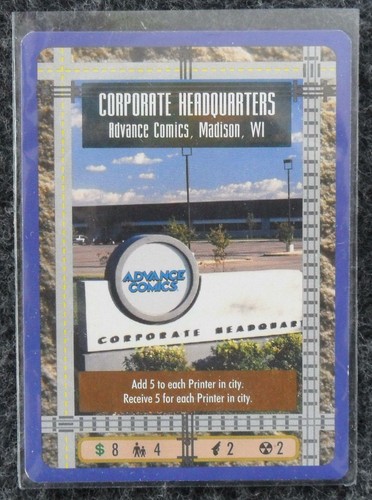 Sim City The Card - Advance Comics Promo CorporateView on eBay »


 ▶Pinball Fantasies1992MS-DOS / PC
 ▶Windows 95 in the BrowserMS-DOS / PC


 ▶Free Croatia (DOS game)MS-DOS / PC

 ▶NHL '941993MS-DOS / PC