Year 1994, Korea, a small development team called Artcraft. While we in Czechia were swapping floppies and scraping together our first computers from German flea markets, these folks were putting together a game I had no idea existed back then — and that's a shame, because Lychnis deserves attention.
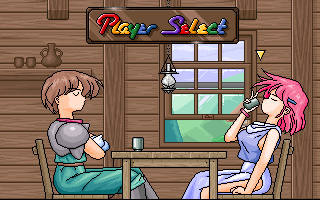
Lychnis is an action game for MS-DOS from Korean publisher Softmax. I don't know the setting or exact plot in detail, but genre-wise it's action in the spirit of that era — fast, straightforward, emphasizing movement and reflexes over branching dialogue. Korea back then had its own gaming scene that only rarely made it west, and Lychnis is exactly the type of title that got filed away in history's drawer, even though the people behind it had futures ahead of them.
Looking at the controls and game mechanics today, we have to see them through the lens of mid-nineties MS-DOS. What worked back then as snappy action might feel clunky now — that's not criticism, that's the physics of time. Keyboards without analog movement, the game's own rhythm tuned to hardware of that era. Anyone who remembers that or wants to try it for the first time without a nostalgia filter needs to account for a certain adaptation period.
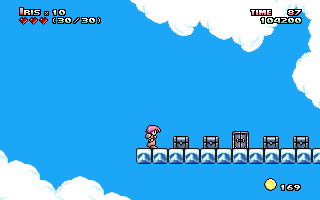
Why remember this game at all? Because part of the Artcraft team went on to build careers on titles like Ragnarok Online and the Magna Carta series. Lychnis is basically an early sketch of greater things to come. The music was handled by sound team TeMP, whose fingerprints run through later games too — you've probably heard their work in PangYa without knowing where that style came from. This is the kind of context that makes it worth cracking open old archives in the first place.
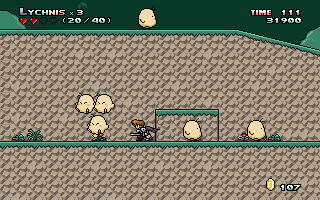
Today Lychnis will mainly appeal to people interested in Korean gaming history, or those who like reaching for things off the beaten path — no guarantee of a polished experience, but with the understanding that you're looking at something that came into being in 1994 in a different world and only reached us now, through emulators and retro archives. That might be the most interesting part about it.
 old
 DOOM Slayer Cutoff Graphic Tee広告eBayで見る »
 DOOM: The Dark Ages Slayer Collectible Coin Figure Limited広告eBayで見る »
 Doom Retro Wall Banner Flag Cover Art (3 x 4') Doomguy広告eBayで見る »
 Doom: The Dark Ages - Doom Slayer Shield Medallion& Art広告eBayで見る »
 Doom The Dark Ages Cover Art Slayer Poster T-Shirt広告eBayで見る »
 Tubbz Boxed Doom Slayer Duck Figure Jeep広告eBayで見る »


 ▶Bubble Bobble1989MS-DOS / PC


