It was the first time I discovered that a computer could beat a human at a game that has existed for over a thousand years. Not chess. Hnefatafl.
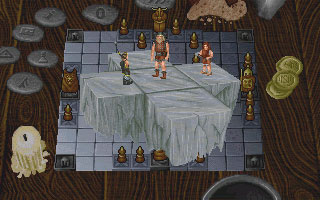
Kings Table from 1993 by Imagitec Design is a computer version of the Scandinavian board game hnefatafl, which predates chess by several centuries. Vikings played it roughly from the 4th to the 12th century — until chess pushed it out. Before you start playing, you need to know the basics: two sides, attackers and defenders. The defenders start in the center of the board, where the king is hidden, and their goal is to get him to the edge. The attackers must surround and capture the king. Simple asymmetry that makes it a fascinating puzzle.
The mechanics come straight from historical rules — pieces move like rooks in chess, along straight lines any number of squares, and you capture an opponent's piece by surrounding it from two sides. The king is a special case and capturing him requires surrounding from four sides. The game works, mouse controls are comfortable, the AI offers reasonable resistance. What doesn't age as well is the complete absence of any tutorial — if you don't know what you're doing beforehand, the game leaves you groping in the dark. In 1993 that was standard; today it will deter anyone unfamiliar with hnefatafl from another source.
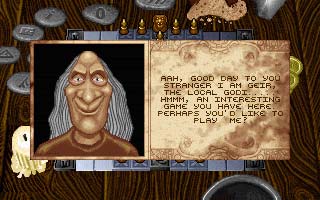
Why do I remember it? Because it first made me think about whether chess is the only "clever" game in the world. Hnefatafl has a different rhythm, a different way of thinking about space and asymmetry. Attacking is more intuitive, defending is harder — and that's intentional. Kings Table translates it faithfully, without unnecessary embellishment. The graphics are functional, the music exists, the sounds are modest. No spectacle, pure playability.

Who will enjoy it today? Players who love abstract strategy games and are interested in something beyond chess and Go. History enthusiasts who want to try how people actually thought around a Viking campfire. And also anyone who wants to verify whether they could have defended their king back in the year 993. The answer is probably no.
 old
old


 ▶Hugo 31995MS-DOS / PC
 ▶Dangerous Dave in the Haunted Mansion1991MS-DOS / PC


 ▶Toy Story1995Sega Mega Drive

 ▶Contra1988MS-DOS / PC
 ▶Commander Keen 4: Secret of the Oracle1991MS-DOS / PC


 ▶Giana Sisters1987MS-DOS / PC