Year 1985, a CGA monitor glowing with four colors into a dark bedroom, and I find myself in hell. Literally. Not as a metaphor for poor game design, but as the opening scene of a text adventure that begins by sitting you face-to-face with the devil.
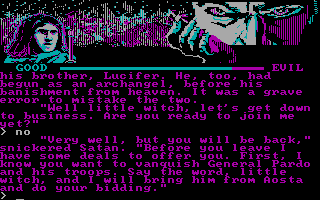
I, Damiano: The Wizard of Partestrada from Bantam Software is a text adventure set in medieval Italy. You play as the wizard Damiano, and the story draws from a novel source — an unusual approach for the time, when literature was attempting to break into the world of games. The setting encompasses angels and demons, medieval Italian towns and the afterlife, so you won't complain about lack of atmosphere.
Controls are purely text-based — parser, commands in English, classic for the genre. The game understands basic constructions, but like every parser of that era, you sometimes wonder what exact word it wants. Writing TALK instead of SPEAK, TAKE instead of GET — you know the drill. CGA graphics supplement the scenes with static images that are solid for 1985, and the PC speaker produces sounds that don't cross the line of tolerability. A decent package for the time.
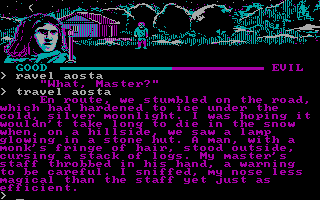
What remains with the game is its premise. Medieval Italy, magic, moral dilemmas between light and darkness — this is material most games of that era didn't even touch. While other adventures sent players to steal golden keys from dungeons, this one attempted something more. How well it worked in practice depended heavily on how patiently you approached the parser and how much you enjoyed reading longer passages of text. Anyone expecting action was in the wrong place. Anyone looking for an interactive novel might have been in the right one.

Today it's an artifact. Those who love genre history or text adventures in general will find in I, Damiano an interesting relic from a time when publishers weren't afraid to draw from literary sources and take thematic risks. You can run it today in your browser via DOSBox emulation without much effort. Expect dry text, expect a parser with limited vocabulary, expect a game that takes itself seriously. That last thing, paradoxically, gives it value even forty years later.
 old
old


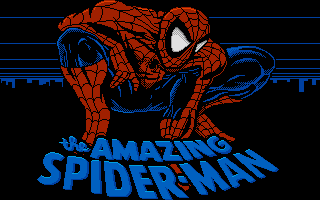 ▶Amazing Spider-Man1989MS-DOS / PC


