Imagine it as a clash of brains and reflexes — a computer virus pulls you into a world of logic puzzles where you need to react in seconds. Cyberwar from 1994 reeks of '90s cyber-punk kitsch from its very name, but inside lurks something genuinely interesting.

This is a game that throws you into a series of abstract logic puzzles with an action layer on top. You solve schematics, connect elements, fulfill conditions — except the whole time it feels like the game is in a hurry. Things keep moving, the clock keeps ticking, it keeps pushing you. It's not a pure logic game where you can set your own pace. There's that arcade pressure in it, that feeling that time's running out.
Controls are straightforward — mouse, clicks, keyboard now and then. The mechanics aren't complicated, but their combination with time pressure turns each level into a little adrenaline rush. When you nail a level, it's not the "aha, I figured it out" feeling, it's more like "we made it." And when you don't, you blame your own speed rather than bad design.

Cyberwar is a typical product of that era when developers chewed on exotic concepts — cyber, virtual worlds, networks — and tried to build an aesthetic from them. Today it's obviously an artifact of its time. The graphics are primitive, but they've got that specific charm of a plastic monitor with CGA colors. Sound? More like pointless decoration you'll mute.

Which brings me to ask: who does this game suit today? Those who want to see what gaming was like thirty years ago. Those who prefer timed stress over long deliberation. It's not the peak of any genre, but it's no disaster either. It's a kind of curiosity — a logic game dressed up in arcade action pressure, wrapped in aesthetics nobody takes seriously anymore. And it runs in your browser without a hitch.
 old
old


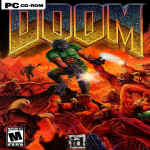 ▶Doom1993MS-DOS / PC
