1994, late afternoon, and I'm staring at my monitor as my ship sinks into a horde of enemies I couldn't shoot down fast enough. Different times. XQuest was exactly the kind of shareware action game that spread on floppy disks across the whole country, and nobody really knew who made it — until you eventually found out it was the work of a single guy with the nickname Atomjack.
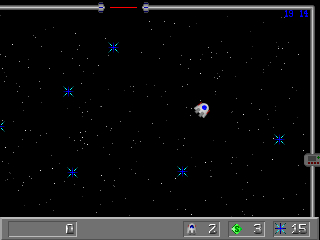
It's an action shooter inspired by arcade classics of the crystal hunt genre — games where you fly through closed arena-like levels, collect crystals, and fend off waves of enemies. The original came from the Apple world — Mac and Apple IIGS — so the DOS version by Mackey was essentially a port meant to bring that experience to IBM-compatible machines. And in 1994, that was quite a feat for one person.
The controls are straightforward: fly, shoot, dodge. Nothing that needs a manual. The enemies — Mucoids, a nasty invading fleet headed for Earth — come in by the dozens and demand quick reflexes more than tactical thinking. The game even offers two-player co-op on a single keyboard, which was more of an exception than the rule among shareware titles back then. The game's replay and demo recording features show that the author was thinking bigger than was typical at the time.
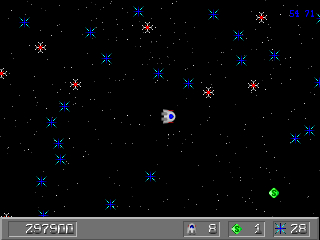
What keeps XQuest afloat even today is that sense of fluidity and pure playability without unnecessary layers. The graphics are sparse, the sounds match what a 1994 Sound Blaster could do — passable, but don't expect miracles. This is exactly the category of game where nostalgia acts as an amplifier: if you played it back then, you'll be satisfied. If you're trying it for the first time, you might be surprised how quickly the boredom sets in — the arenas repeat after a while and enemy variety has its limits.
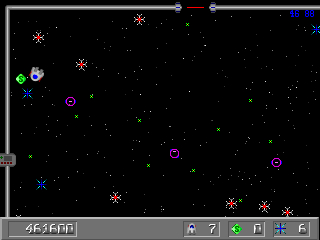
These days XQuest runs without a hitch in your browser through DOSBox emulators, and it's a solid choice for twenty minutes when you want to relive what the shareware DOS world looked like, created by individuals in their bedrooms. For those hunting for a rediscovered hidden gem, this won't be it — but as a fresh look at what one person with a compiler and plenty of spare time could pull off in the mid-nineties, it makes sense.
 old
old


 ▶Doom1993MS-DOS / PC


 ▶Ultimate Mortal Kombat 31996Super Nintendo


 ▶Contra1988MS-DOS / PC