Year 1993, midnight, parents asleep, and I'm trying to get some adventure downloaded from a BBS up and running. The Dark Convergence by Jeff Kintz — I didn't know the developer's name back then, and I probably wouldn't buy him a drink even today, but the game caught my attention just from its title alone.
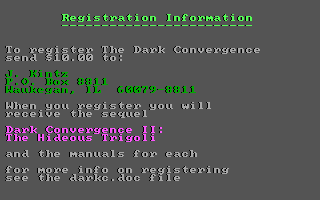
It's a text-based or graphically sparse adventure from the early nineties, set in a dark, probably fantasy or horror atmosphere — the title hints at some kind of convergence of forces, dark powers converging at a single point. I won't risk making up the exact plot and character names, because this is exactly the kind of shareware production that scattered itself across the world on floppy disks and BBS networks, with documentation existing basically in the form of a single README file. Kintz was apparently a solo developer — amateur, but motivated.
Adventures of this type from 1993 rose and fell on the quality of their puzzles and the creativity of their worlds. Controls were either purely text-based or simple point-and-click in EGA graphics. Without a manual and the gaming community surrounding the game, you were left to your own patience and willingness to read every line of text carefully. That sounds like torture today, but it was the standard back then.
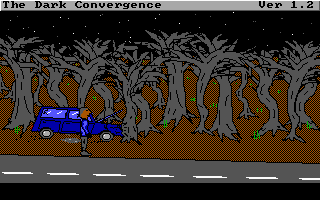
What I remember about this type of shareware adventure from that era is exactly that ambivalent feeling: sometimes you'd stumble onto a hidden gem that outshone commercial releases with its atmosphere, other times you'd hit a project that ground to a halt at the first logical obstacle because the author forgot to test whether the game was even beatable. The Dark Convergence falls into the category of games that flew under the mainstream radar — Sierra and LucasArts were taking the genre in different directions then — but that's exactly why it's worth trying today. It's a direct glimpse into how people made adventures just for fun or obsession.
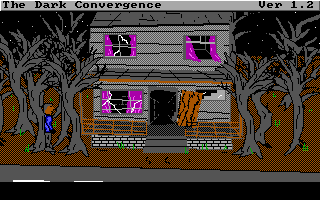
Today, mainly game history collectors and shareware scene enthusiasts will play it. If you're drawn to the archaeology of nineties DOS adventures and don't mind if the game gets rough around the edges—both logically and mechanically—it's worth firing up in DOSBox in your browser and giving it twenty minutes. I've had worse ways to spend an evening.
 old
old


 ▶Amazing Spider-Man1989MS-DOS / PC


