Esta reseña aún no está traducida — mostramos el original (English).
Monster trucks crushing tiny cars in a cloud of digital dust—that's the pitch, and honestly, it's the only pitch Torus Games needed. This 2007 racer from the Australian indie circuit doesn't pretend to be anything fancy. It's a straightforward demolition derby where physics is more suggestion than law, and watching a massive vehicle cartwheel through a track corner is the entire point of being here.

You're behind the wheel of an oversized monster truck, barreling through courses designed to accommodate vehicles that have no business fitting through them. The tracks are tight, cluttered with obstacles—ramps, barriers, other cars—and the game leans into the absurdity rather than fighting it. This isn't simulation territory. It's about raw acceleration, loose handling, and the peculiar satisfaction of plowing through scenery like it owes you money.
The driving itself has that loose, arcade feel where your truck responds to input with a slight delay, as though it's wrestling with momentum and gravity simultaneously. You'll drift around corners in ways that would make a racing line instructor weep, but that's part of the charm. Collisions feel weighty; hitting another vehicle or a solid object actually means something. The camera pulls back far enough that you can see the chaos unfolding, though the graphics—low-poly meshes and basic textures—won't make anyone nostalgic for visual fidelity. What matters is readability, and the game manages that well enough.

Monster Jam arrived late in the PC's life, when the industry had already moved on to bigger budgets and shinier graphics. That timing left it stranded: too primitive to compete with commercial racers, too niche to find a casual audience. But within its modest scope, there's a game that knows what it is and commits. The Australian developers understood that demolition derbies don't need licensed vehicles or complex career modes—they need crashing, and crashing with weight and consequence.

Today, it's a curio from the era when bedroom programmers could still ship games on PC without publishing gatekeepers. The handling takes minutes to learn, the tracks are short, and a session rarely stretches beyond an hour. That brevity actually suits it. Play it in a browser emulator, spend twenty minutes wrecking AI opponents, and move on. It won't redefine your Saturday night, but it'll scratch an itch for straightforward vehicular chaos that modern racing games have forgotten how to deliver.
 old

 Camiseta Negra Juego De Colección PS1 Talla Limón GranVer en eBay »
 Gran Turismo Figura de Acción Nerd Geek Collection EditionVer en eBay »


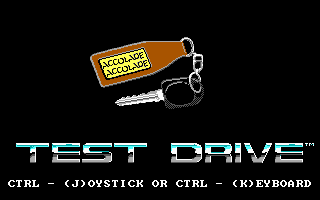 ▶Test Drive1987MS-DOS / PC


 ▶Micro Machines1994MS-DOS / PC


 ▶Street Rod 2 - The Next Generation1991MS-DOS / PC


 ▶F11993Sega Mega Drive


 ▶Turbo Outrun1989Sega Mega Drive


 ▶Road Rash II1993Sega Mega Drive


