There are games that age like fine wine. Tajemství Oslího ostrova ages more like a glass of soda left open overnight — flat in places, but you can still taste what it once was. And what it once was, back in 1994, was something genuinely unexpected: a boxed commercial adventure game from Brno, Czechoslovakia, at a time when most people assumed the only thing Czech developers could produce was pirated copies of Western titles.

Pterodon Software, led by Petr Vochozka, built a point-and-click adventure set around the mystery of Donkey Island — a puzzle-driven quest that followed the genre conventions of its era closely enough to feel familiar, yet carried a distinctly local flavor in its humor and construction. The story puts you in the role of an investigator unraveling oddities on the island, collecting items, combining them, talking to characters, and slowly poking the world until it gives up its secrets. Standard adventure fare, executed with limited resources and considerable ambition.
The gameplay is exactly what you'd expect from a mid-nineties DOS adventure: pixel hunting, inventory juggling, and the occasional logic leap that makes sense only to whoever designed it at two in the morning. The interface is functional without being elegant. Controls respond the way they should, which in 1994 was already half the battle. The puzzles range from straightforward to head-scratching, and the pacing is uneven — but that was the genre's default setting back then, not a Pterodon-specific flaw.
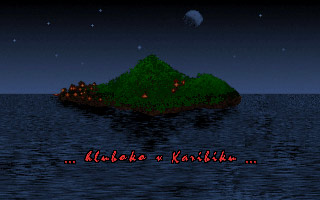
What matters historically is the sheer fact of its existence. This was the first commercially released Czech adventure game. Not a clone distributed on floppy disks through a friend of a friend, but an actual boxed product on store shelves, released the same month the West was drowning in CD-ROM fever and LucasArts was churning out classics. For the Czech gaming scene, Tajemství Oslího ostrova was proof that domestic commercial development was possible. Pterodon went on to make Vietcong years later, which tells you they learned their lessons well. This is where that path started.
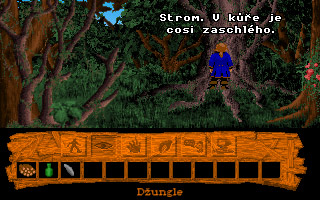
Today the game is a curiosity more than a recommendation. It doesn't hold up against the LucasArts adventures it was contemporary with — the production values are modest, the writing lacks the density of the best of the genre, and some of the puzzle logic will frustrate even patient players. But for anyone interested in the history of Czech game development, or for those of us who remember the specific thrill of encountering a game made in your own language by people from your own country, it carries a weight that has nothing to do with its puzzle design. Play it in the browser for twenty minutes, appreciate what it represented, and tip your hat to Brno.
 old
old ▶Amazing Spider-Man1989MS-DOS / PC


