MicroProse did things differently in 1994. While Madden shouted at you with action-packed visuals and demanded reflexes, this title sat down and asked: what if you tried to think like a coach?
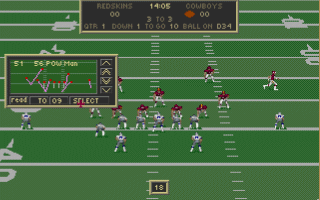
Ultimate NFL Coaches Club Football is a pure management-tactical simulation of American football. You don't play individual plays in real time — you play the system. You select formations, build game plans, decide when to risk it on fourth down and when to kick a field goal. The game presents itself as both an educational tool and simulator rolled into one, and to that end it tries to cover the NFL quite thoroughly.
The controls were reasonably complex in 1994 — precisely as much as you'd expect from MicroProse. This company never saw a tutorial as a weakness. The coaching approach meant success or failure depended on decisions before the snap, not on whether you hit the right button fast enough. For players used to more arcade-style football, it was cold water in the face. For everyone else, this depth was reason enough to keep coming back.

What holds up today and what doesn't? The tactical layer still makes sense — American football is a game of planning, and that hasn't changed. The problem is presentation. The graphics were functional back then; today they look like a spreadsheet with ambitions. Without period context and without a passion for the genre, it's hard to convince your brain that you're watching a football game behind those simple visuals. MicroProse knew how to build atmosphere through text and sound — here, Sound Blaster did what it could.
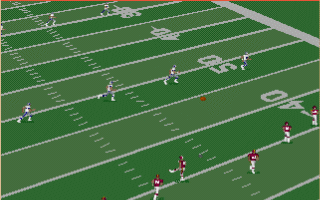
Today, anyone curious about what tactical sports simulators looked like before the genre moved exclusively to console franchises will play it in a browser. Or a nostalgic fan who remembers how MicroProse approached every subject — with respect for the material and never underestimating the player. You don't need to know American football; the game will teach you the rules itself. That was the sales pitch back then. Today it's more of a historical curiosity than active entertainment, but as a document of where tactical sports games were heading in the first half of the nineties, it makes sense.
 old

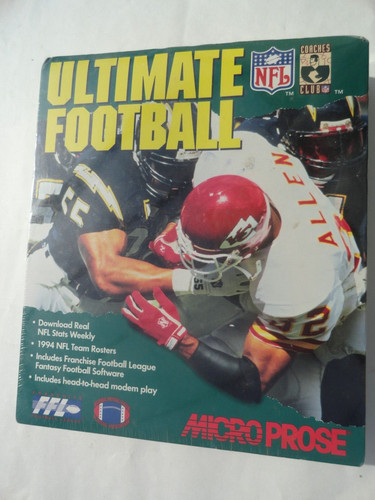 BIG BOX Ultimate NFL Coaches Club Football (PC DOS Cd-rom 1994) NEW Sealed広告eBayで見る »


 ▶NHL '941993MS-DOS / PC


 ▶European Club Soccer1993Sega Mega Drive

 ▶The Manager1991MS-DOS / PC


