Year 1992, a floppy disk sits on the table, and on the cover is Dustin Hoffman with a hook instead of a hand. A movie license. I knew what I was getting into.
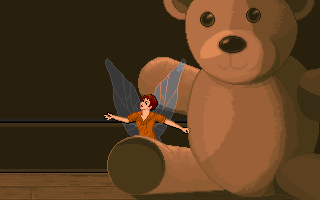
Hook by Shadow Software is an adventure set in the world of Steven Spielberg's 1991 film — the one with Robin Williams as the forgotten Peter Pan who must return to Neverland to rescue his children from the clutches of Captain Hook. The game loosely follows the film's plot, so if you know the movie, you'll get your bearings. If you don't, you'll still be fine, because the story isn't exactly a maze.
It's a point-and-click adventure in the spirit of that era's productions, which tried to ride in the wake of LucasArts and Sierra. You click, collect items, combine them, talk to characters. The interface is functional, the graphics solid for 1992 on DOS — colorful, with recognizable locations from the film. The music from Sound Blaster was listenable enough. The problem lies elsewhere: the game is short, the difficulty in places feels more like a children's afternoon than a real challenge, and the logic of some puzzles fits about as well as Hook fits the role of a family man. That is — not quite.
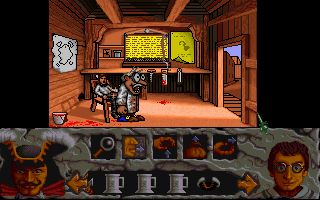
Movie licenses from that time shared one common trait: they were made quickly to hit the window between cinema and VHS release. Hook is no exception. It's not a bad game, but it's not one that someone would remember with the expression "that was something." People remember it mostly because the film was everywhere and the disk sat under the Christmas tree. Shadow Software wasn't a big name, and they didn't become one with this game either. What they delivered was mainly proof that adventures could sell well in mainstream film packaging — and that wasn't a given back then.
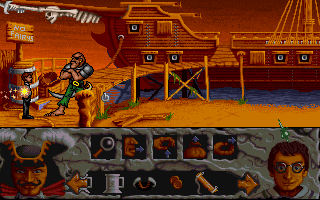
Today Hook appeals to fans of period licensed titles and people who want to spend an hour or two in the atmosphere of a nineties point-and-click adventure without pressure. Genre veterans will breeze through it without notes. If you loved the film as a kid, add half a star for nostalgia — the game largely preserves that atmosphere. Playing it in a browser today means a comfortable twenty minutes at the opening screens and then deciding whether to finish it or just watch the film instead. Either choice is legitimate.
 old
old


![The Colonel's Bequest (French) [FanTrad]](/media/retro/box/1033664.png.webp)


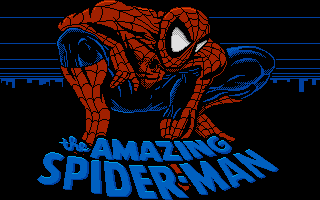 ▶Amazing Spider-Man1989MS-DOS / PC


