Before I had the money for Gauntlet, Double Dare was my first encounter with the idea that a game didn't have to be just about shooting or jumping. The answer to the question — that was everything. Logic, speed, a bit of luck, and then just panic because time was running out.

Double Dare is based on an American TV format and its premise is simple: answer correctly and you advance. Miss and you fall into a trap or something explodes. The game combines questions from various categories — film, science, politics, sports — with physical challenges that were represented as graphic obstacles and environmental hazards. In the DOS version, this transformed into logic puzzles that aren't particularly complicated, just designed to make you decide quickly.
You play against the clock and most often against the computer. Number of rounds, categories — everything is randomized. Controls are straightforward: pick an answer with numbers or arrow keys, confirm with Enter, move on. The graphics are basic, colorful, more reminiscent of educational software than an entertainment game. Sound? Minimal. But that's precisely the charm — it's not about visuals, it's about the fact that you had to choose and didn't have time to think about it.
At the time of release, it was a rare attempt at entertainment software that wasn't purely action-based. Today you'd call it casual gaming. Double Dare wasn't a hit like Duke Nukem, but it had its fans. First, because the questions were right on the edge — not trivial, but not difficult either. Second, because given the hardware it ran on, they pulled it off without major issues.

It has aged. The questions are outdated, the graphics look like fossilized fifties, and playing solo against dumb AI isn't exactly gripping. But as part of a LAN party or when you want to test yourself against a friend — now that works. And in a browser through emulation? That's the ticket. It takes a moment to remember how it played, but then it hooks you.
 old
old


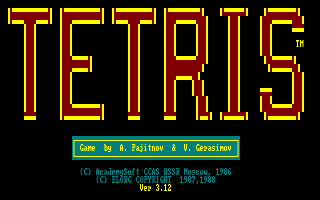 ▶Tetris1985MS-DOS / PC

 ▶Boulder Dash1984MS-DOS / PC
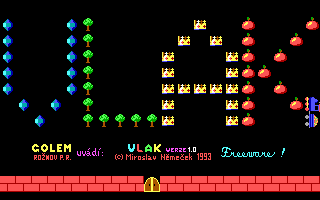 ▶Vlak1993MS-DOS / PC
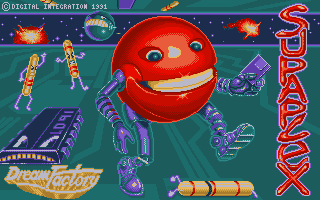 ▶Supaplex1991MS-DOS / PC

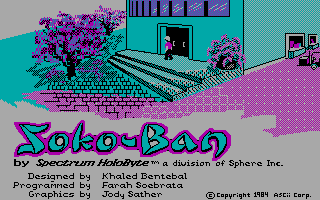 ▶Sokoban1984MS-DOS / PC


 ▶Boulder Dash III1986ZX Spectrum

