You jump off the wall and fall. You fall and fall, while communist enforcers chase beneath you. That's Berlin Wall in three seconds — bonkers logic trying to be a story, but remaining just mechanics.
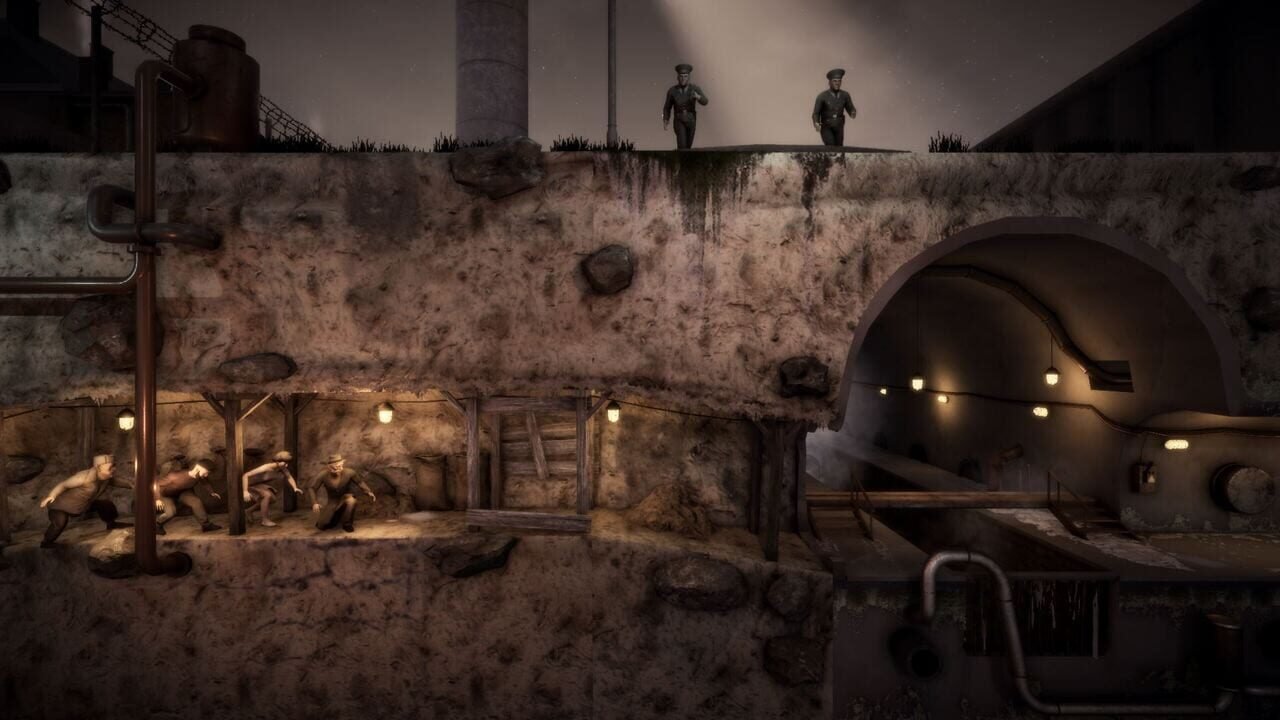
It's a platformer from 1993, when arcades and jumping were already getting pretty stale. You play a character fleeing along the crumbling Berlin Wall, clearing obstacles, collecting items, and escaping enemies. The setting is interesting, but the game mines it barely at all. I'm behind the iron curtain, I want out, I encounter guards — that could be compelling. Instead you're hopping across platforms like in any other game from the era.
Control is stiff and robotic. The character responds with noticeable lag, jumps have fixed range, no finesse. It's not smooth parkour like Prince of Persia — that wasn't the ambition anyway. It's older, rougher linear progression from the nineties. Graphics are colorful, animation is clunky, sounds are there to exist. The game punishes your mistakes and sends you back — same as a hundred other platformers I've played.

Berlin Wall didn't stick in anyone's memory as a game that changed things. It's not a cult classic. It's not "so bad it's fun." It's just garbage from a time when a publisher tried buying pieces of something big — in this case the fall of the Berlin Wall as thematic bait — and cramming it into a space where it doesn't belong.

Today you'll blast through it for a minute or two while quietly scrolling a game list online. Nostalgic value? Minimal. Gameplay? Painful. If someone wants to remember what jumping felt like in the early nineties, they should go for Aladdin or Sonic instead. You'll only touch this out of collector's completionism — and even that's overselling it.
 old
old


 ▶The Simpsons Arcade Game1991MS-DOS / PC
 ▶Dangerous Dave1990MS-DOS / PC


