Denne anmeldelse er endnu ikke oversat — vi viser originalen (English).
Your father is dead. The poison was found in your room. Everyone thinks it was you. That is the opening hand Gooka deals you, and it does not apologize for it.

Released in 1997 by the Czech studio JRC Interactive, Gooka is a point-and-click adventure loosely based on a novel by Richard D. Evans. You play a young man thrown headfirst into a murder mystery — your father poisoned, the blame landing squarely on your shoulders. The setting has a vaguely medieval fantasy feel, the kind that was common in European adventures of the era: dark stone corridors, shady merchants, people who lie to your face and expect you to like it. Your job is to clear your name, which means talking to everyone, picking up everything that is not bolted down, and figuring out which combination of items and dialogue actually moves the story forward.
The mechanics are standard genre fare — left click to look, right click to interact, inventory dragged across the screen like a shopping list from a bad dream. What set Gooka apart in the Czech market was its full voice acting. In 1997, a domestic production with dubbed dialogue was not something you took for granted. Hearing Czech voices come out of a Sound Blaster — actual human beings reading actual lines — had a novelty that is genuinely hard to explain to someone who grew up with everything already voiced. The quality of the acting varies, as it did in most adventures of the period, but the effort is there and it holds up better than you might expect. The puzzles sit somewhere between logical and arbitrary, which is also standard for the era. You will get stuck. You will click on everything twice. You will eventually solve it and feel smarter than you probably are.

What Gooka represents is a specific moment in Czech game development — a small studio swinging for something ambitious and mostly connecting. It is not Broken Sword. The production values are modest, the interface has rough edges, and some puzzle solutions require a leap of faith rather than genuine deduction. But it has atmosphere. The story moves with enough purpose to keep you curious, and the setting has a grim consistency that a lot of bigger games from the same year lacked. It aged the way most mid-tier nineties adventures did — a little stiff, occasionally frustrating, but honest about what it is.
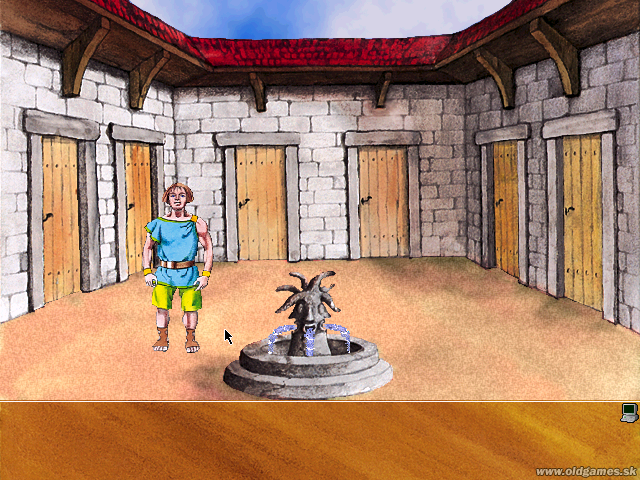
If you have a soft spot for European adventure games of the late nineties, or if you want to see what Czech developers were capable of before the industry consolidated into something more polished and less interesting, Gooka is worth your time. Play it in a browser, skip the hassle of DOS configuration, and let the story do its work. The mystery is not going to reinvent anything. It does not need to.
 old
old ▶Amazing Spider-Man1989MS-DOS / PC


