Цей огляд ще не перекладено — показуємо оригінал (English).
ZOK-Software. Year 2001. A name that stuck in my memory purely because I once opened the wrong window during computer class and instead of an Excel spreadsheet, a firefight between tanks broke out. The teacher didn't look up. I finished the game until the end of class.
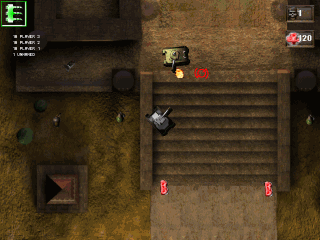
Final Fighter is an action game where you sit behind the controls of a tank with one mission: destroy everything that moves. No story intro, no worldbuilding. Battlefields, enemies, explosions. The game offered a singleplayer campaign and multiplayer for multiple players on one or more machines, which was still something worth mentioning on the box back in 2001 for small Czech titles.
The controls are straightforward enough that you'll master them before you finish reading this paragraph. The tank turns, drives, shoots. The mechanics don't go deep and don't try to. That's not necessarily a criticism — it's the type of game where you turn it on, turn your brain off, and watch your opponent's treads fall apart. The problem comes when you realize that after ten minutes you've seen everything the game has to offer. Singleplayer therefore works as a warm-up, multiplayer as a reason to stick around a bit longer.
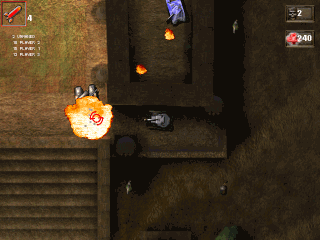
It's hard to say what exactly Final Fighter brought to the table that you couldn't find better elsewhere. It wasn't a technical marvel, it wasn't a genre pioneer. It was a product of its time and its place — a small Czech action game that worked because it was available, ran without problems on an average machine, and didn't need a manual. It had its role. But today age sits on the game visibly: in the visuals, in the variety, in how long the fun lasts.
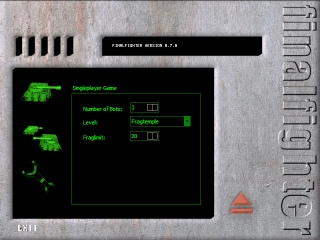
If you enjoyed tank mayhem in simpler form and fancy a short nostalgic trip back to 2001, Final Fighter will hold up for a bit in your browser. Don't expect depth, don't expect length. Expect a few minutes where you're shooting at pixelated tanks and not asking anyone why.
 old

 Mortal Kombat Logo T-ShirtПереглянути на eBay »
 McFarlane Toys - Mortal Kombat Klassic - Kung Lao 7" ActionПереглянути на eBay »


 ▶Bubble Bobble1989MS-DOS / PC


