Two tanks on scorched desert, a radial wind-indicator grid in the corner, and a message of destiny: one of us won't leave. Tank Wars from 1986 keeps it simple — you shoot the other player across obstacles, calculate angle and power, wait for the computer to respond or the second person to press enter. Like arthurian duels in digital form, except ammunition instead of a sword.

The game was born in an era when the programmer looked around and saw that DOS existed, that it had graphics capabilities, and that a soldier and a cannon were the simplest things to draw. You haul tanks onto a simple terrain sketch, set your angle and power, fire, and trust physics — or rather its ninety-six-percent simulation. Obstacles shatter, terrain shifts, individual projectiles fly in their own physical reality. Strategy boils down to stupid mathematics and not getting taken out on the first try.
Playing is hypnotic in its reduction. You press arrows for angle, numbers for power, enter to fire. The computer calculates, animation takes ages in modern time units, the shell lands somewhere near where you thought. If you miscalculated by one degree or one power unit, you can grin and wait another ten minutes for your turn. Slowness is part of the ritual, not a flaw. There's no speed-up button — you have only time and imagination.
Tank Wars survived because it created an archetype that repeated for decades. Artillery in dozens of variants got its inheritance from Lemmings through Hedgewars to Worms. But this game stands as their prototype — minimalist, uncompromising, utterly indifferent to whether you enjoy playing it.

Playing it today means accepting its pace and graphics as part of the code. It's not about creating a miracle, it's about enduring a series of long turns and not losing your mind when your tank's projectile unexpectedly comes back at you. You can run it in a browser without guilt — it's an educational experiment in how little a game needs to remain incredibly fun.
 old
old


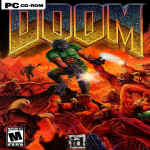 ▶Doom1993MS-DOS / PC