Year 1994, I had a brand new sound card at home and a friend brought me some disks with something new from Bethesda. The name meant nothing to me. Thirty years later, everyone who's ever lost a weekend in Morrowind or Skyrim knows it.
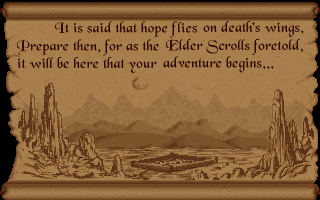
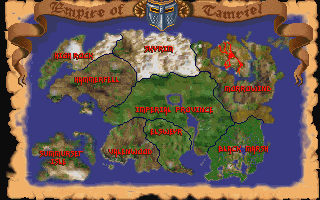
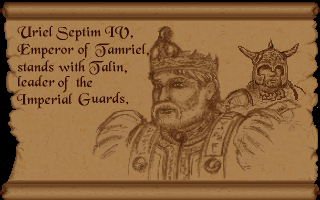
The Elder Scrolls: Arena is the first installment of today's legendary series and the cornerstone of the entire world of Tamriel. The plot sits on a solid fantasy template — the treacherous battlemage Jagar Tharn imprisons Emperor Uriel Septim in another dimension, steals his likeness, and seizes power. The player, originally an insignificant prisoner, gradually fights their way across the entire map of the empire, collecting artifacts and working toward the emperor's liberation. The plot isn't particularly original, but it functions as a skeleton for the world.
The game sticks with the then-modern first-person perspective in real-time, which was still a bold decision for the RPG scene of that era. Combat is straightforward — you swing a weapon with the mouse, enemies come at you from the dungeon darkness. The class system, statistics, and spell system are surprisingly well-developed for the year of release. The problem lies elsewhere: procedurally generated dungeons. Bethesda procedurally generated an entire continent with thousands of locations, but the result is like an endless labyrinth of gray stone walls where after ten minutes neither you nor the game itself can find your bearings. A compass was a luxury, learning the map was possible — but finding your way in a specific dungeon was more a matter of luck than skill.
Arena is remembered today mainly as an artifact of creation — the first imprint of a world that would gradually develop into one of the most acclaimed RPG series ever. But it has aged harshly on its own. Playability is sometimes brutally raw, the user interface requires the patience of someone who remembers manuals printed in small font across sixty pages, and the technical issues under the original DOS were notorious even in the nineties. Bethesda eventually released the game for free over two years after its release — and that alone says quite a bit about its commercial trajectory.
Today, people pick up Arena primarily to understand where the series started — or if they have a truly masochistic relationship with dungeon crawlers from the first half of the nineties. I'd recommend Morrowind to everyone else. Arena is historically important, playable only conditionally, and nostalgic exclusively for those who back then truly had no better choice. I personally put it down after two hours. It took thirty years to admit it.
 old
old


 ▶Dungeon Master1989MS-DOS / PC


 ▶Light Crusader1995Sega Mega Drive


