Questa recensione non è ancora tradotta — mostriamo l’originale (English).
The cursor spins a wireframe cube on your screen, and suddenly you're not looking at a puzzle anymore—you're looking at a problem that won't leave you alone. Cube: 3D Puzzle Mayhem arrived in 2007 from Metia Interactive as one of those games that seemed to understand something the industry had forgotten: sometimes a simple mechanic, rotated just right, becomes obsessive.
It's a straightforward premise dressed up in three dimensions. You've got a cube, and on its faces sit colored blocks or symbols that need to match. Rotate the cube, line things up, clear rows or patterns depending on the ruleset. The game layers on different challenges—time pressure in some modes, specific match requirements in others, the occasional scenario where one wrong move cascades into failure. It's Tetris DNA filtered through isometric geometry, except the playfield isn't falling; you're the one spinning it.
What makes it stick is the tactile feel of the controls. Mouse or keyboard, the rotation responds immediately. There's no lag between your intention and the cube's movement. That matters more than you'd think in a puzzle game where seconds decide whether you clear the board or watch it fill up. The difficulty curve climbs steadily without ever feeling artificial—each new challenge builds on what you've already learned. You don't suddenly need a manual; the game just expects you to think one step further than last time.
By today's standards, Cube shows its age in presentation. The graphics are utilitarian, the colors muted, the soundtrack forgettable. But there's something clean about that minimalism. It doesn't distract. A 2007 puzzle game could be heavier, more adorned, more desperate for your attention. This one trusts the mechanic to carry itself, which it does.
The real question is whether isometric cube puzzles still pull you in the way they did in the mid-2000s. If you grew up with games that respected your intelligence over your reflexes, where spatial reasoning beat twitch, then yes. Cube hasn't aged into irrelevance; it's just become quieter. Load it up in a browser emulator and you'll remember why you sank hours into games like this—not because they're flashy, but because they're honest.
 old
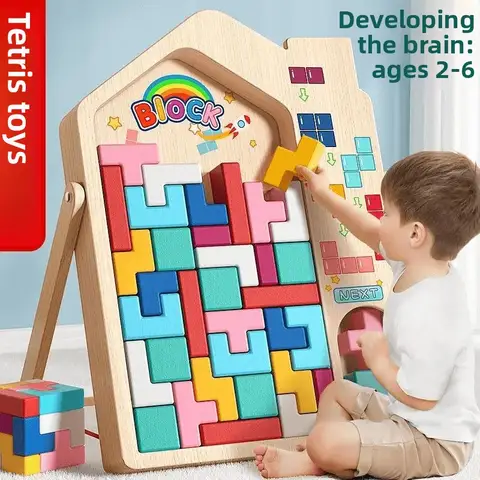 Parent-child activities of Tetris building blocks developCompra su AliExpress »
 TETRIS METAL SIGN PLAQUE - Retro poster cave arcade roomCompra su AliExpress »





 ▶Arkanoid1988MS-DOS / PC

 ▶Boulder Dash III1986ZX Spectrum


 ▶Chess1998Sega Mega Drive


