Denne anmeldelse er endnu ikke oversat — vi viser originalen (English).
Year 1996, store shelves buckling under the weight of Command & Conquer and Warcraft II boxes. In the midst of it all stands War Wind — a game few gave a real chance, and which largely deserved that neglect, though not entirely.
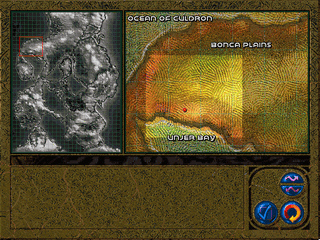
Behind the game is DreamForge Intertainment, a studio that had mostly RPG titles to its name back then. Real-time strategy was uncharted territory for them. The story unfolds on the alien planet Yauvan, where humans don't figure at all — four alien races wage war each for their own reasons. The technologically advanced Tha'Roon crave supremacy, while the other factions have their own motivations and stories. On paper, it sounds interesting. A game without human heroes, without conventional good versus evil, with a genuinely different aesthetic.
But in the actual game, most of that intrigue gets diluted in mediocre execution. The basic loop — harvest resources, build a base, train units, attack — works the way you'd expect from an RTS. The game tries to add depth through moral choices and various mission objectives that don't always boil down to "destroy the enemy." Units gain experience and can be named, so there's a weak seed of what we'd now call persistence. The controls are stiff, pathfinding does its own thing sometimes, and the interface doesn't help with clarity. In 1996, it was barely competitive.
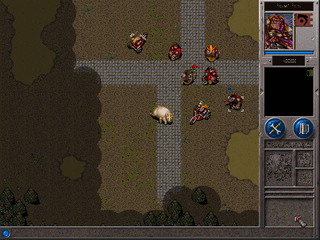
I remember War Wind mainly because it tried to be different, and that's both its lasting value and its curse at once. The four playable factions genuinely differ in playstyle, not just building colors. The alien aesthetic of planet Yauvan has its own distinctive character, and the music holds the atmosphere. At the same time, the game never mustered enough courage or polish to stand out beside the genre's titans. SSI — or rather DreamForge — just couldn't fine-tune what needed fine-tuning. A sequel, War Wind II, did come out, which in itself shows the game had its niche fanbase, however small.
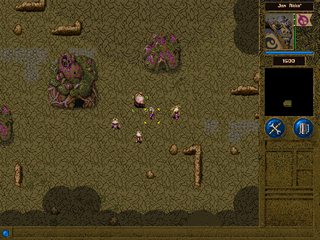
Today War Wind appeals mainly to those seeking more from RTS strategy than generic medieval or sci-fi settings and don't mind the game hitching sometimes. It's a curiosity from when the genre was finding its shape and every studio was testing how far they could push it. Playing it today in a browser or via DOSBox means peering into a dead-end development branch — one that had an interesting idea but didn't finish it before Blizzard definitively showed how it's done right.
 old
old


 ▶North & South1990MS-DOS / PC


 ▶Teenage Queen1988MS-DOS / PC


 ▶Chess1998Sega Mega Drive


