Denne anmeldelse er endnu ikke oversat — vi viser originalen (English).
Year 1997, DOS was breathing its last, and I remember spending afternoons with games like this when it was raining outside and nobody told me I should go out. Faery Tale Adventure II: Halls of the Dead arrived as a quiet sequel that most players missed — yet it was one of the more remarkable attempts at making an accessible RPG at a time when Diablo was rewriting the genre's rulebook.
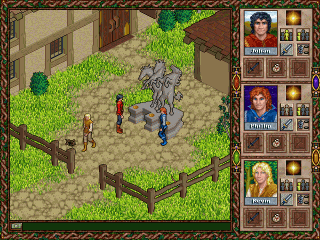
The game picks up from its predecessor from the late eighties. It returns a trio of brothers — Jules, Philip, and Kevin — to a fantasy world that this time had taken on a darker tone. The goal is classic: you venture through locations, fight, collect equipment, and progress through a story that has no ambitions to reinvent the genre, but does a decent job of guiding you from beginning to end. The game prided itself on being approachable to less experienced players — an approach that was more the exception than the rule back then.
The mechanics are straightforward. Mouse controls, real-time action combat, inventory management without unnecessary complexity. From today's perspective it looks modest, but in 1997 it was a conscious design decision — not laziness, but choice. The game won't throw you into dozens of pages of manual. You simply start in a town, get your bearings, and go. Whether that's a virtue or a flaw depends on how many layers you expect from an RPG.
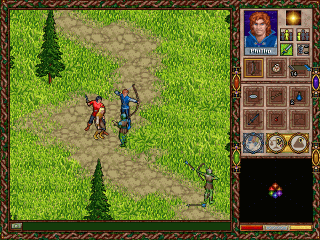
What truly keeps Halls of the Dead afloat even now is the pixel art. The designers did honest work back then — every sprite is readable, locations have atmosphere, and the color palette wasn't used blindly. Behind it all gleams that typical nineties precision of hand-drawn worlds born from necessity, not stylistic choice, and yet — or perhaps because of it — it holds up better than many later 3D graphics from the same era. The game world isn't huge, but what's there looks believable.
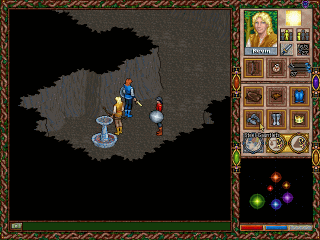
Where the game has aged less gracefully is depth. The story stays on the surface, combat loses its tension over time, and the character system doesn't offer as many meaningful decisions as an experienced player might want. It's an RPG for an evening or two, not weeks. Today it's best played in a browser by those looking for a shorter, easygoing adventure with nice pixel art — or those curious to see what accessible RPG attempts looked like just before the genre went in a different direction.
 old
old


 ▶Dungeon Master1989MS-DOS / PC


 ▶Light Crusader1995Sega Mega Drive


 ▶Doraemon: Giga Zombie no Gyakushuu1990Nintendo NES
 ▶Space Rogue1989MS-DOS / PC
 ▶Wizardry 7: Crusaders of the Dark Savant1992MS-DOS / PC