A character glances around the arena, raises their fists, and waits. This is Little Fighter — a humble beat-em-up from the mid-nineties that tried to be Street Fighter for those who couldn't afford an Amiga.
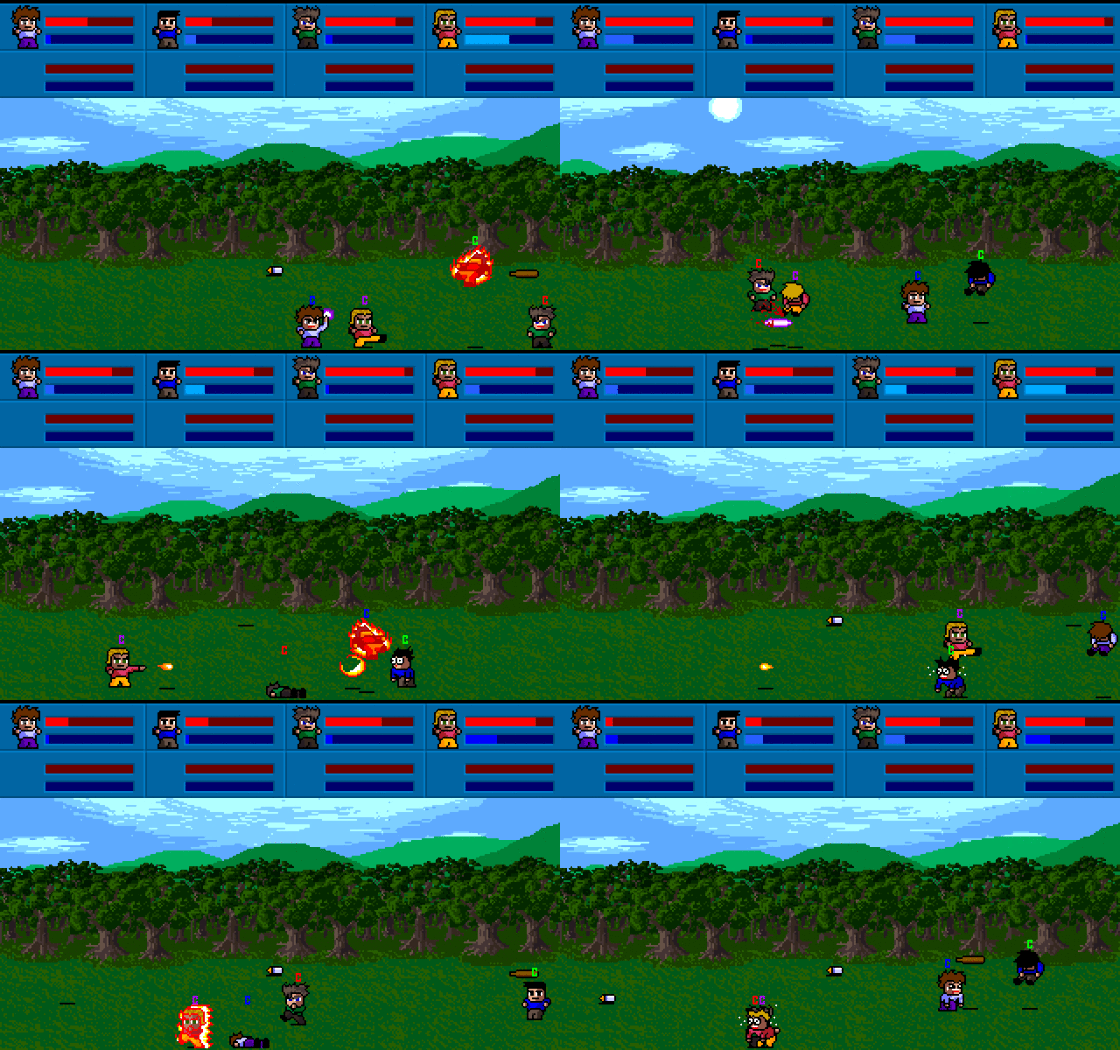
It's a straightforward action game where two players (or player versus computer) fight in various arenas. The characters are pixel wreckage, the arenas are bare, the music loops endlessly. Simple, raw, with no pretense of polish. The publisher and creators fade into obscurity in available sources — the game appears only here and there in replicated code, surviving more thanks to computer game archaeologists than any official interest.
The controls are elementary: movement, two attack buttons, jump. Combos aren't complicated, punch power depends on how long you hold the button. Gameplay boils down to trading blows — you move, wait for the opponent's mistake, attack, retreat. No special maneuvers, no signature moves, no graphics that'll make you hungry for more. It's work — tedious work you do because your buddy's sitting next to you and wants to play.
Little Fighter represents that layer of early DOS-era games that had no ambitions. It wasn't Mortal Kombat, it had no pretensions of being one. It existed because it existed, played in computer labs and village community centers where Discovery Channel had already bored everyone and you had to dial up to get online. Looking at it today, you see only the skeleton — no substance, no shine, no reason to care.
These days you play it mostly out of curiosity. You want to see how a beat-em-up was made in the mid-nineties with no budget and no talent. Or you want to drift off to the hum that a generation of eighteen-year-olds listened to while they were bored waiting at the dentist's office. It runs in a browser, you can try it without any hassle — and then you mostly wonder why you even clicked.
 old
old


 ▶Doom1993MS-DOS / PC


