Bài đánh giá này chưa được dịch — chúng tôi hiển thị bản gốc (English).
Year 1986, DOS, playability measured in minutes, and graphics that look like they were drawn by someone fundamentally opposed to using more than four colors. That's Dragons: A Challenge in Chivalry — and I remember games like this from that era precisely because they were honest. They didn't pretend to be more than what they offered.

Rescue Princess Gwendoline from the castle. Done, that's the whole story. No cutscenes, no dialogue, no world with deep lore. You're a knight, there's a castle, inside is a girl. This worked in 1986 and Mario confirmed it every weekend at the arcade on the corner.
Mechanically, it's somewhere between arcade action and simple puzzle-based movement controls. Capital PC User Group — which was essentially a user club sharing software, not a publisher with a budget — produced a game where the main challenge comes from spatial orientation and avoiding enemies. The enemies are ghosts, or more precisely something that resembles ghosts just enough that the graphics could pull it off without overthinking it. Movement is jerky, collisions are sometimes a guessing game, but within the shareware scene of that era this was standard fare.
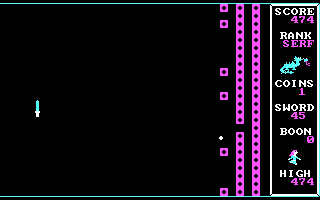
What do I take away from this after all these years? Mainly that games like this existed in thousands and most of them vanished without a trace. This one survived in archives only because the internet is merciful to every file someone bothered to upload. Playability today lasts about as long as it takes to figure out the basic logic — then it's pretty much exhausted. Aging is cruel, but honest: the game was never a masterpiece, just a decent way to kill an afternoon.
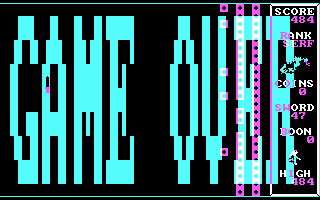
Play it today if you're curious what amateur game development looked like in the pre-Steam, pre-Indie, pre-game design document era. It's a historical artifact just like the game itself. Twenty minutes in your browser, some nostalgia or curiosity, and you'll know exactly why veterans remember Commander Keen with such gratitude.
 old
old


 ▶Doom1993MS-DOS / PC


 ▶Ultimate Mortal Kombat 31996Super Nintendo


