 old
oldReal-time strategy compresses a whole war into one uninterrupted session. Nobody waits for a turn, so the opponent keeps expanding while you are still deciding, and almost every title in this list runs the same three-layer loop: send harvesters to a resource, spend what they bring back on buildings, and turn those buildings into a steady stream of units. The third layer is where the games separate from each other, because a group that walks into the wrong place is gone in a few seconds no matter how good the economy behind it was.
The template was written by Dune II - The Building of a Dynasty (Westwood Studios, 1992). Three houses fight over the spice of Arrakis, harvesters carry it to a refinery, and a sidebar converts credits into structures and units on a map you scroll yourself. It is stiff by later standards, since orders go to one unit at a time and group selection did not exist yet, but every part the genre later standardised is already in place. Westwood reused the architecture for a near-future war in Command & Conquer (1995) and an alternate Cold War in Command & Conquer: Red Alert (1996), both with live-action briefings and a separate campaign for each side.
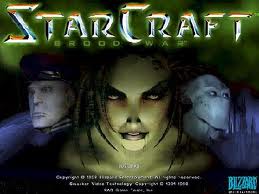
Blizzard entered with Warcraft: Orcs and Humans (1994) and refined it a year later in WarCraft 2: Tides of Darkness, which added naval and air units, fog of war that closes again behind your troops, and a map editor; the expansion Beyond the Dark Portal continued the campaign. StarCraft (1998) then pushed asymmetry to its limit with three factions that share almost no units, buildings or economy, which is why it stayed a competitive game for more than a decade. Total Annihilation (Cavedog, 1997), designed by Chris Taylor, replaced resource piles with metal and energy that flow continuously and put hundreds of 3D units on a single map, while Age of Empires (Ensemble Studios, 1997) paced the same loop through historical ages.
Several titles here break the formula deliberately. Z, from the Bitmap Brothers, removes the economy altogether: the map is cut into territories, taking a territory switches on the factory attached to it, and the factory then produces on its own, so the whole game becomes a race for ground. KKND - Krush, Kill 'N' Destroy sets human survivors against mutants after a nuclear war, Dark Reign: The Future of War gave players unusually detailed standing orders for unit behaviour, and Earth 2140 keeps two very different armies fighting over a ruined planet. Die Siedler 2 belongs to the building branch of the family, where the real problem is a supply chain of roads and carriers rather than a front line.
Part of this list runs directly in the browser through an emulator, with no installation and no registration: Dune II, WarCraft 2, Z, KKND, Conquest Earth and Die Siedler 2 among them. For the rest you will find a catalogue entry with details and screenshots, plus download or purchase links wherever the rights allow it.


 chỉ tải vềStarCraft: BroodWar1998MS-DOS / PC


