 old
old ▶Lucky Luke1997MS-DOS / PC


 ▶Freddy Pharkas - Frontier Pharmacist1993MS-DOS / PC

 ▶West Bank1985ZX Spectrum

 ▶West Phaser1989MS-DOS / PC

 ▶Express Raider1987ZX Spectrum
 ▶Shootout at Dodge1992MS-DOS / PC
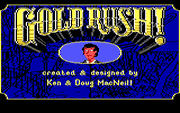 ▶Gold Rush1988MS-DOS / PC


 chỉ thông tinSunset Riders1991Super Nintendo
 chỉ thông tinLaw of the West1985Nintendo NES
 chỉ thông tinGun.Smoke1985Nintendo NES
 chỉ thông tinWild Gunman1984Nintendo NESGunfighter: The Legend of Jesse Jameschỉ thông tinGunfighter: The Legend of Jesse James2001MS-DOS / PC
 chỉ thông tinLucky Luke: Wanted!2001Game Boy Advance
 chỉ thông tinEl Paso1987ZX Spectrum
The western reached video games through the arcade first, because a duel converts into rules almost without effort: two men, one input, whoever draws faster wins. Midway's Boot Hill put two players on opposite sides of the screen in 1977, shooting across a line of cacti, and Nintendo's Sheriff followed in 1979 with a lawman firing in eight directions at a ring of bandits. From there the genre settled into three strands that this collection follows: gunfighter action, adventure games with dialogue and puzzles, and strategy about settling the West.
The shooting strand is the largest. Capcom's Gun.Smoke (1985) is a vertically scrolling shooter with a bounty hunter on foot, while Sunset Riders, made by Konami for the arcade and later converted to consoles, is a side-scrolling run-and-gun for several players at once, with bosses introduced by wanted posters. Blood Bros., a follow-up to Cabal, uses the same over-the-shoulder shooting-gallery view as its predecessor. Sega's Bank Panic (1984) and West Bank, a Spanish reworking by Dinamic, strip the setting down to a single decision: a door opens and you have a fraction of a second to tell a customer from a robber. Data East's Express Raider stages its fights on a moving train, Exidy's Cheyenne used a light gun, and Mad Dog McCree from American Laser Games ran full-motion video of real actors off laserdisc. Wild Gunman travelled the other way, from an electro-mechanical arcade cabinet of the 1970s to the NES and its Zapper.
The adventures come mostly from the PC side. Freddy Pharkas: Frontier Pharmacist, published by Sierra in 1993 and co-written by Al Lowe, casts a retired gunfighter as the pharmacist of a small frontier town, and most of its puzzles involve mixing prescriptions. Sierra had already covered the period more seriously in Gold Rush! (1988), which offers three routes to California in 1848: by ship around Cape Horn, across Panama, or overland by wagon. Lucky Luke is a platform game built on the comic series by the Belgian artist Morris.
The third strand is about settlement rather than shooting. Oregon Trail Deluxe, from the educational publisher MECC, is the game an entire American generation met in a school computer lab: a budget for oxen and supplies, then river crossings, illness and rationing all the way west. Accolade's Law of the West (1985) runs on conversation, where the reply you pick decides whether an encounter ends in a duel. Desperados: Wanted Dead or Alive is real-time tactics rather than an adventure, moving the Commandos formula to the frontier. The list also holds lesser-known titles such as Billy the Kid, Shootout at Dodge and Wild West World, and Custer's Revenge, an unlicensed Atari 2600 release from 1982 that was condemned when it appeared and is kept here only as a record of that period.
Titles marked as playable run directly in the browser through an emulator, with no installation and no registration. A physical keyboard is worth having, since the arcade and 8-bit titles map their controls to keys rather than to a gamepad.