Этот обзор ещё не переведён — показываем оригинал (English).
Reader Rabbit came to your home in a colorful box with a rabbit on the cover and parents' reassurance that you'd be learning instead of watching TV. That's how it worked in the nineties — an educational game was sometimes the only reason a kid ended up at the computer doing anything other than playing a pirate game or Bomberman.

Reader Rabbit 3 is a classic educational adventure from 1993, which its creators wrapped in a story about a rabbit journeying through various worlds. The goal is simple — get through levels, face challenges, and learn something along the way. It's about getting familiar with reading, logic, and basic computer skills. The game didn't try to be cool or modern; it knew what it wanted, and that was fine.
Playing consists of solving mini-games and text puzzles. The keyword is "mini" — each task lasts just a few minutes, then you move on to something new. It's built on the principle of "don't offend, but don't bore either," which when working with a children's audience sometimes means compromise between education and entertainment. The graphics are period-appropriate — simple sprites, colorful backgrounds, sounds from an early SoundBlaster that start getting on your nerves after five minutes. But that's precisely part of the atmosphere of games that weren't meant for long play sessions without a break.
Today we remember it more for nostalgia than for brilliant design. It was material that worked — kids learned and parents were happy. Then as an adult you catch sight of an old box and the feeling returns: a bored mid-morning, keyboard buttons you don't press quite right, and the knowledge that some games made sense primarily for pedagogical reasons.
If you want to play it today, you can do it in an emulator through DOSBox. It's not a game you'd play out of pure gaming passion — it's more about seeing what kids were offered at the beginning of the eighties' early computer ventures. Part of its charm is precisely that it aged without complaint — it did what it was supposed to do, and that was enough.
 old
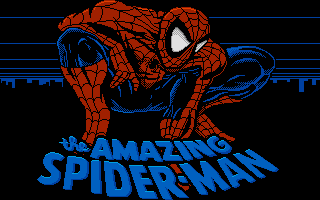 ▶Amazing Spider-Man1989MS-DOS / PC


 ▶Muppet Treasure Island1996MS-DOS / PC

 ▶Bubble Bobble - The Adventure1993ZX Spectrum
