Ez az ismertető még nincs lefordítva — az eredetit mutatjuk (English).
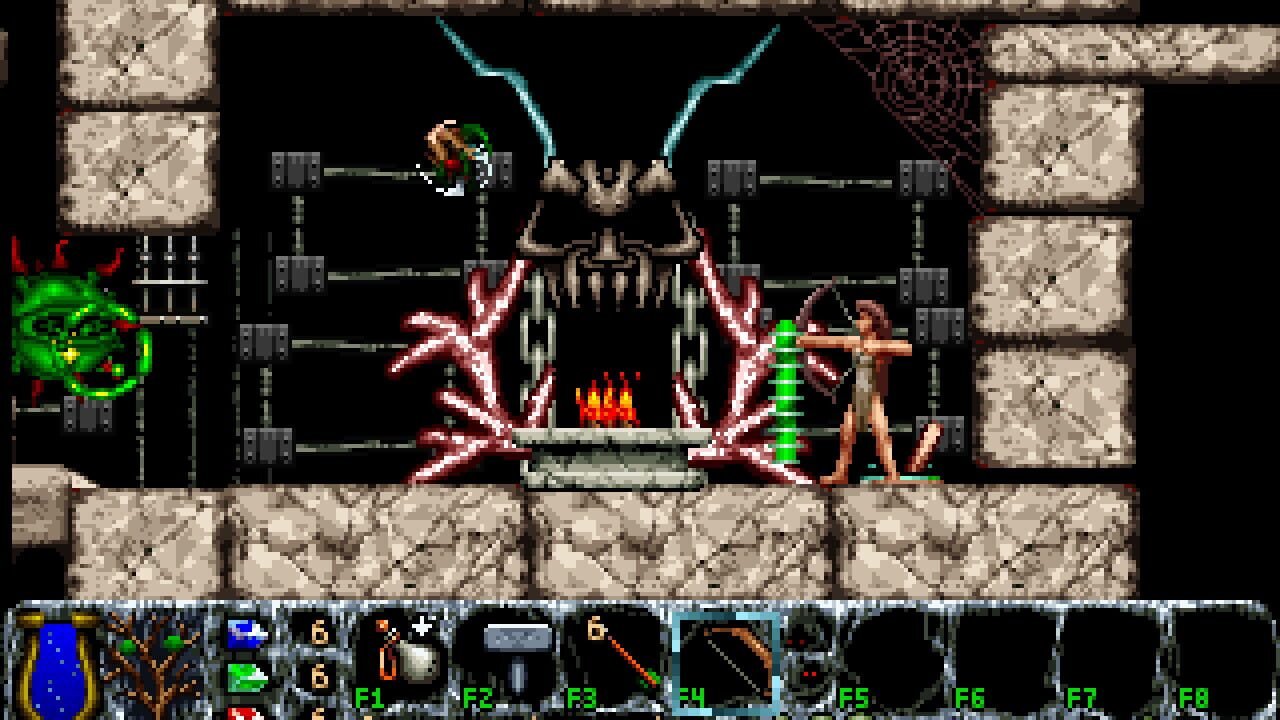
When you encounter an ordinary tree a few minutes into the game that you need to bite the branches of to progress, you know you're in something special. Inner Worlds is a strange mix of graphic adventure and platformer from 1996 that looks like someone drew it with their eyes closed while simultaneously playing with some old chemistry lab at startup.

You play in color contrast — a light character in a dark environment — but the real color of the game lies in its bizarre logic. It's not a classic adventure with dialogue and objects you use to solve puzzles. Here you move forward simply to see what comes next. There are jumping sequences interrupted by scenes where something illogical happens, strangely drawn creatures and you don't understand at all why you're simply moving to the side and jumping when it looks like something else should be happening.
The controls are straightforward — movement, jump, sometimes some special click. The problem is that while playing it's never clear what the game wants from you. Sometimes you find yourself in a situation where it's unclear whether it's a bug or if it's actually intentional. The same goes for the graphics — pixelated, asymmetrical, almost clinical — not beautiful, but it has a hallucinogenic feel to it. Like you're watching someone's dream who dreams in squares and in two colors.

In the nineties, they made exactly these kinds of things — experimental, non-commercial projects that came out without much publicity. Inner Worlds is more of an artifact than a game you play for fun. It's not poorly made, it's rather alien. It's better to watch than to play, and that's precisely what makes it interesting.
Today, in the browser, it's a gem for those who love oddities. It's not a game for killing time, but an experience that leaves you bewildered. Precisely because you can't get it out of your head.
 old
old


