Year 1992, Core Design hadn't invented Lara Croft yet and were experimenting with various genres like a kid in a candy store. Curse of Enchantia was one of those attempts — and you can tell it a bit.
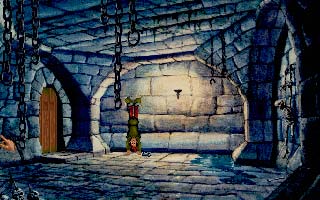
It's a point-and-click adventure set in a fantasy world where the main character, an ordinary boy, ends up in a foreign realm through a magical portal. The objective is simple: get back home. No complex dialogues, no branching plot. The game communicates through visuals — text is minimal, everything is solved through inventory and combining items.
And here's the rub. Curse of Enchantia looks like an adventure, but plays in places like an arcade with adventure elements. The screens connect almost in a platformer fashion, the hero moves, jumps, dodges enemies. Except it doesn't really work as either an adventure or action game. The logic of the puzzles is capricious — not devious, but arbitrary. A few times I combined items out of pure desperation and it worked, without me understanding why. That's not satisfaction, that's a lottery.
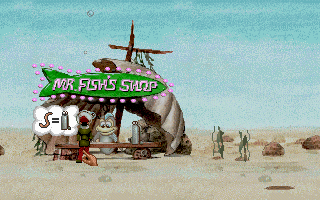
What you can't deny the game, though, is its visual style. For 1992, Curse of Enchantia looks surprisingly good — the main character's animation has decent fluidity, the environments are colorful and varied. Core Design knew how to draw back then. Sound-wise it's average for the era — a few melodies from Sound Blaster, effects on par with the times. Not memorable, but it doesn't get on your nerves.
Why do I remember it? More as a curiosity than a gem. Back then I was drawn to that cover art and the promise of a fantasy world. Reality was a bit different — frustration from illogical moments and a sense that the developers themselves didn't know exactly what they were doing. It has aged mercilessly, especially that arbitrary game logic. A modern player without period tolerance will quit before reaching the halfway point.
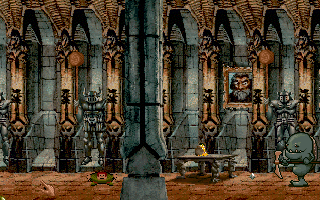
Today it appeals to those who collect rare pieces from the early nineties era and don't mind playing with a walkthrough by their side. As a historical artifact it has value — Core Design were still finding themselves here, and it's interesting to see how chaotic it was before their real breakthrough came. You can try it in a browser, but without nostalgia or collector's drive you'll struggle to finish it.
 old
old


 ▶Amazing Spider-Man1989MS-DOS / PC


 ▶The Farmer's Daughter2002MS-DOS / PC