این نقد هنوز ترجمه نشده است — متن اصلی (English) را نشان میدهیم.
A sixty-page manual. I remember that feeling when you pulled the booklet out of the box and wondered if you were buying a game or study material. Walls of Rome from 1993 by Mindcraft was exactly that kind of case — a historical strategy focused on sieges that tests your patience first, and only then lets you play.
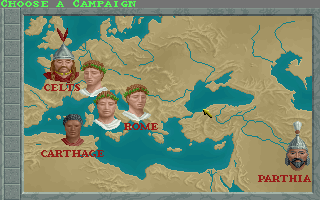
The theme is clear: ancient Rome, siege warfare, commanding armies in period conflicts. Mindcraft was no newcomer back then — the studio was behind the Magic Candle series and knew how to make a game for players who wanted depth, not simplification. Walls of Rome offers multiple armies with different properties and emphasizes tactical real-time command on the battlefield rather than base building.
The game mechanics are refined to the point of being barely digestible. There are plenty of commands — and not without reason. Each unit responds differently, terrain matters, supply lines and morale too. The problem is that the game serves all this to you at once. Without going through the tutorial and without the manual at hand, players in 1993 got lost very quickly. Today it's the same, except the confusion is compounded by an interface that doesn't forgive modern reflexes.
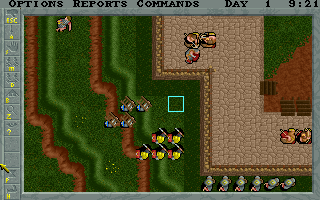
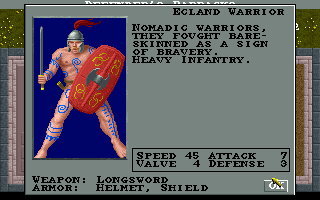
What set Walls of Rome apart from the mass of games back then was its effort toward historical accuracy and the sheer number of variables affecting battle. At a time when most strategy games were still moving pieces around a checkerboard, this was ambitious. But ambition and playability didn't always meet. The game aged exactly as expected — mechanically interesting, accessibility poor.
Today I'd recommend it to anyone who remembers when you read manuals from first page to last and considered that part of the game. If you love siege tactics and don't mind historically grounded challenges with a learning curve as steep as a Roman aqueduct, Walls of Rome will keep you busy for a few evenings. Everyone else should probably go for something more accessible.
 old
old


 ▶Teenage Queen1988MS-DOS / PC
 ▶North & South1990MS-DOS / PC


 ▶Sid Meier's Civilization1991MS-DOS / PC


