این نقد هنوز ترجمه نشده است — متن اصلی (English) را نشان میدهیم.
The year is 1989, and Ultima and Wizardry are raging, with every other developer trying to copy their straightforward formula: defeat the dragon, save the world, title screen. Mindcraft went a different route. The Magic Candle has a goal that genuinely surprised back then — you don't have to defeat anyone in a final battle. You have to complete the ritual before the titular candle burns out. The clock is literally ticking.
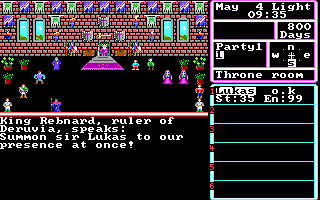
It's a turn-based RPG from a top-down perspective, set in a classic fantasy world with eldritch demons, magic, and a party of heroes you assemble from available candidates. The goal is simple, but the path to it is not: gather the necessary ingredients and knowledge that alone will allow you to seal the demon Dreegan away. Save the world, yes, but more through detective work and logistics than action.
The mechanics are quite distinctive by today's standards. Each character has their own daily time budget, so you have to divide them efficiently between training, rest, shopping, and moving across the map. One character practices swordplay, another studies with a local mage — and you make sure nobody collapses from exhaustion. It's micromanagement that felt like a discovery back then; today it might take a while to get used to it. The battles are turn-based and solid, though without any special frills. Keyboard controls are typically period-appropriate — menu after menu, nothing intuitive, but that was the standard for 1989.
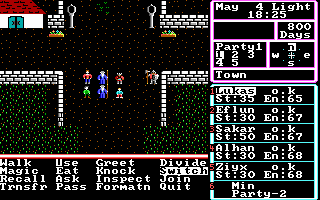
What stuck with you from this game? The pressure. The candle is burning and you know that every wasted day counts. There's no free exploration like "I'll check every dungeon just to be safe" — or rather, yes, but at a cost. That design was truly fresh for computer RPGs at the turn of the eighties and nineties, and it appealed to players who wanted more than just grinding levels. The Magic Candle came out without much fanfare and didn't make the big hit lists, but among genre purists of the time it had a solid reputation. Deservedly so.
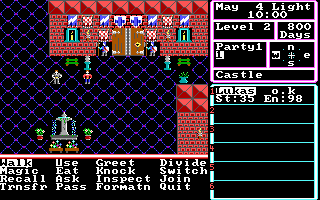
Today it's a game for the patient. If you're not put off by a text interface, the lack of modern conveniences, and the need to keep your own notes on what you discovered where, then in The Magic Candle you'll find an RPG with a thoughtful structure and an atmosphere that doesn't need fancy graphics. You can fire it up in your browser via DOSBox easily, and the first few hours will either captivate you or they won't. If you were having fun with Ultima IV and V in the nineties, there's a decent chance it'll captivate you.
 old
old


 ▶Dungeon Master1989MS-DOS / PC


 ▶Light Crusader1995Sega Mega Drive
 ▶Doraemon: Giga Zombie no Gyakushuu1990Nintendo NES


 ▶Phantasy Star IV1993Sega Mega Drive